Images and traditional patterns on wooden elements are an integral part of decorative and applied art. Their preservation and restoration is not only a technical process, traditional patterns of wooden elements are an important part of decorative and applied art. cultural revival and respect for traditions.
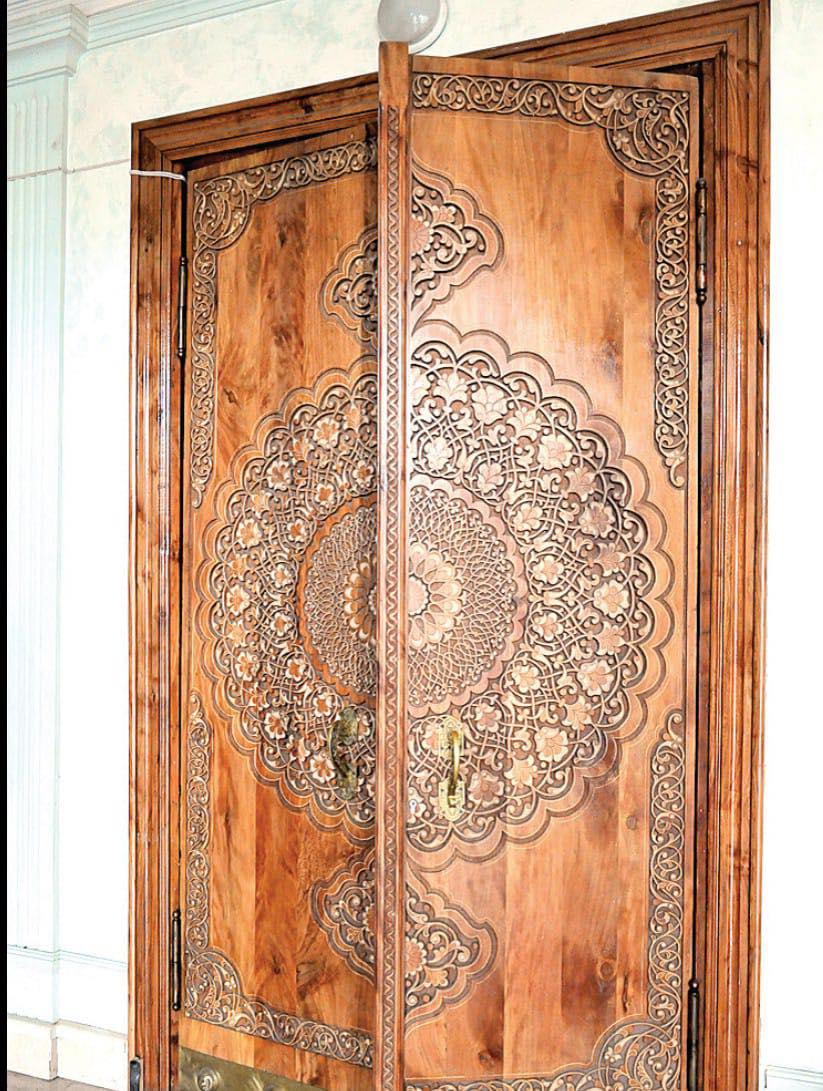
Decorative and applied arts are an important part of the cultural heritage of many nations, and wood carving occupies a special place in it. Patterned wooden elements decorated both household items and architectural details, performing not only an aesthetic but also a symbolic function. In Kazakh culture, traditional patterns carved on wood have deep symbolism. Ornaments such as «koshqar muyiz» (ram horns), «tuye taban» (camel tracks), «synar muyiz» (one horn) and others symbolize strength, well-being, unity with nature. These elements were passed down from generation to generation, preserving the spiritual and aesthetic values of the people. Wood carving was widely used in the decoration of household items: chests, cabinets (asadal), boxes (kebezhe), musical instruments (dombra) and elements of the yurt. Woodcarvers possessed not only technical skill but also a fine artistic taste, accurately conveying national motifs through wood. Nowadays, restoration of such products is becoming an important task.
When restoring carved elements, it is necessary to take into account traditional technologies, use appropriate materials and preserve the original ornament. Modern restoration methods, including 3D scanning and laser engraving, allow for the accurate reproduction of lost fragments without distorting the master’s intent. Thus, traditional patterns on wooden elements are an integral part of decorative and applied art. Their preservation and restoration is not just a technical process, but a manifestation of cultural revival and respect for historical heritage.
Decorative and applied arts are an integral part of the cultural heritage of every nation. One of its most expressive areas is wood carving, which combines utility and artistic expressiveness. Particularly valuable are traditional ornamental motifs that convey the symbolism, worldview and aesthetic ideals of the people. This article examines the features of traditional wood carving in the context of decorative and applied arts and the importance of preserving it through restoration. Traditional wood carving performed not only a decorative but also a semantic function. Patterned elements reflected the cultural codes of the ethnic group, its connection with nature, spirituality and everyday life.
Murat Raikhan, Department of Architectural Restoration