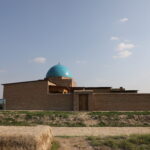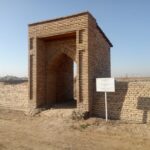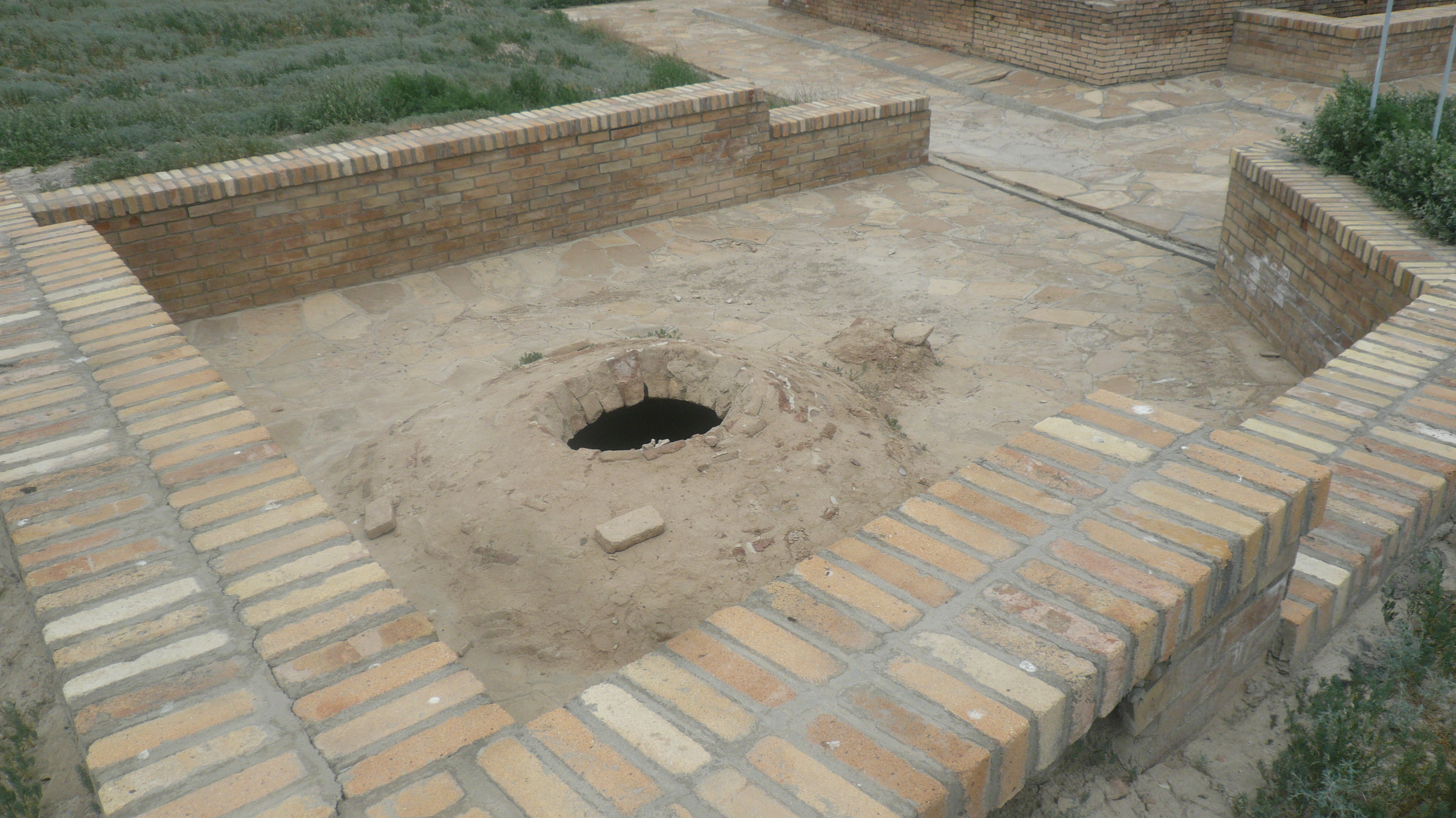
The monument is located 52 meters southwest of the Mausoleum of Khoja Ahmed Yasawi. Coordinates: 43°17.826′, 068°16.219′. The site was accidentally discovered in 1975 during land leveling works. Architects A. N. Proskurin and B. T. Tuyakbayeva documented the structure, and the destroyed southeastern corner was later restored. In 2000, the Turkestan Archaeological Expedition led by M. Tuyakbayev conducted renewed excavations, prepared detailed drawings, and refined the measurements of the structure. The dimensions of the walls at a height of 68–70 cm above ground level are as follows: the northeastern side — 400 cm, the southeastern side — 430 cm, the southwestern side — 435 cm, and the northwestern wall — 340 cm (shortened due to collapse of corner). The damaged corner was restored with rough masonry. The structure originally had a dome built using the “Balkhi” technique, similar to the domes of the bathhouse complex and the underground cell “Ghar”, transitioned from a square base to a vaulted ceiling. The dimensions of the dome’s base are: northeastern side — 370 cm, southeastern —360 cm, southwestern —410 cm, and northwestern — 350 cm. The height of the walls is 192 cm, and the total height from floor to dome is 260 cm. On the northeastern side, there was an arched entrance measuring 70 cm in width and 1.4 m in height.
Inside the burial chamber, the bodies were laid on the floor and covered with a 60–70 cm thick layer of soil, which distinguishes the object from the traditional practice of burial under the floor. In 1975, here were discovered numerous human remains. According to eyewitness accounts, the remains were collected by a special team and reburied in other places.It is likely that the site was used as a mass burial, but the exact number of interred individuals cannot be determined, as later burials overlapped earlier ones.
Above the underground chamber not erected mausoleum— the structure was buried under a mound of earth, and only a quadrangular sagana (rectangular above-ground enclosure) remained visible on the surface.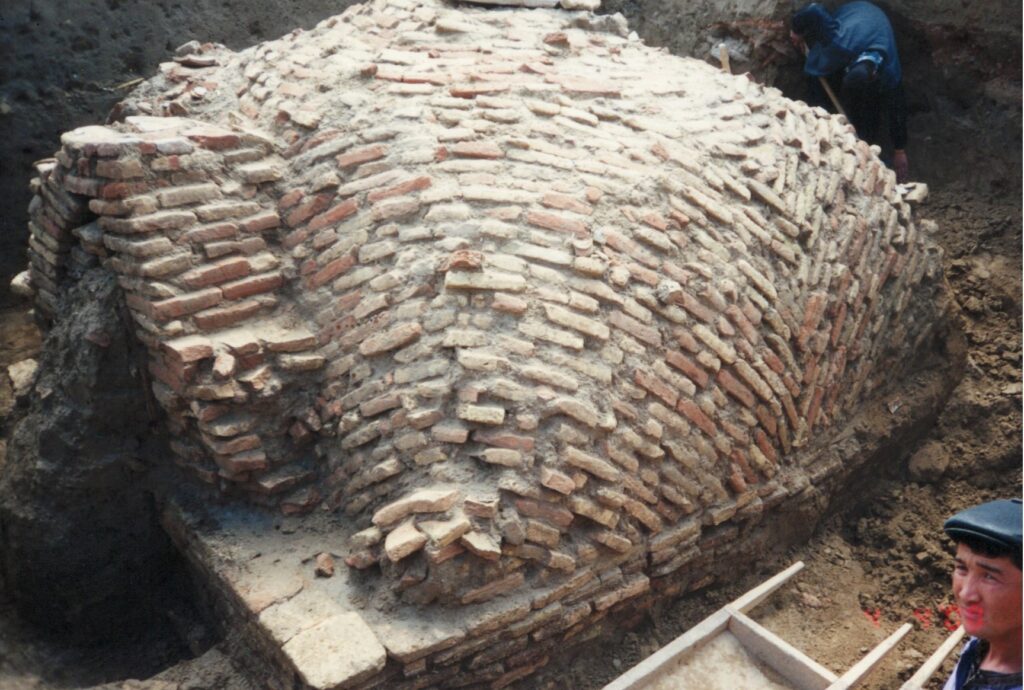
References:
1.Туякбаев М. Новый подземный склеп ХҮІ-ХҮІІ вв. // Вопросы истории и археологии Западного Казахстана. Уральск, 2011. №1-2.
2.Белгісіз жаңа сағана, ХҮ-ХҮІ ғғ. // Түркістан өңіріндегі тарихи – мәдени ескерткіштер. Алматы, 2016. – 17 б. № 09.
3.Тұяқбаев М. Ескі Түркістан понтеоны // М.Елеуовтың 70 жылдығына арналған конференция материалдары. А., 2016. 191-197 бб.