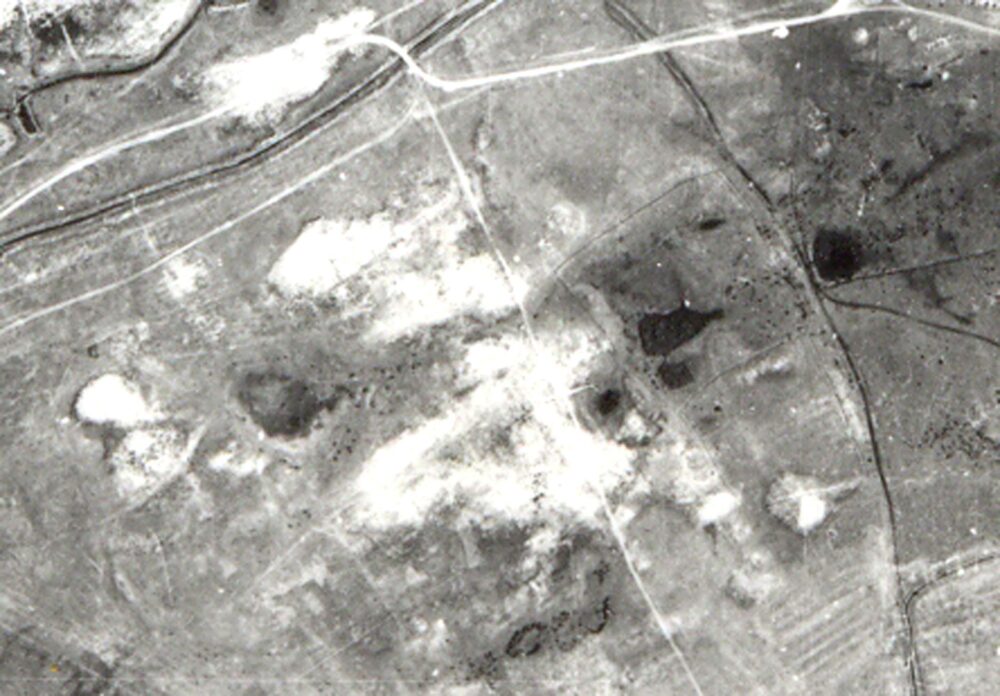
The settlement of Shoitobe-I is located about 7 kilometers south of the city of Turkistan, just 200 meters southeast of the ruins of the ancient town of Shaugar-Shoitobe. Coordinates: 43˚14.501΄, 068˚18.405΄. Elevation above sea level — 255 m. Measurement of the settlement: NW — 470 m, SW — 470 m, NE — 370 m, SE — 340 m. The site was first studied in 1997 by an archaeological expedition led by E. A. Smagulov. Later, between 1996 and 2000, archaeologists under the direction of M. K. Tuyakbayev determined that the ancient city of Shoitobe-Shaugar ceased to exist in the early 13th century, but part of its inhabitants did not leave the area. Research showed that the fates of the townspeople unfolded differently: some left together with the Khwarezmshah’s troops for cities on the left bank of the Syr Darya; others resettled in Yasy — the future Turkistan; while a third group established a new settlement only 200 meters from the old city. Scholars believe that as early as the 12th century, this area was occupied by the rabads — suburban districts of ancient Shaugar. From the 13th century onward, however, the settlement expanded and turned into a major populated center. In 1999, the Turkistan Archaeological Expedition once again carried out excavations under the leadership of E. A. Smagulov and M. K. Tuyakbayev.
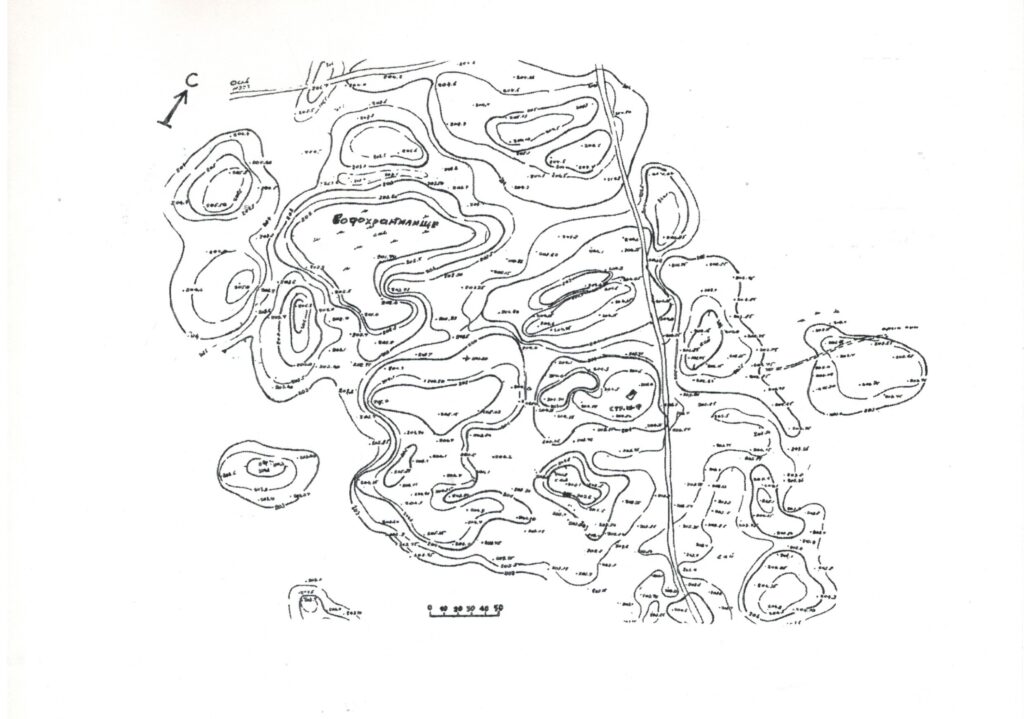
In 1999, a special team of the Turkistan Archaeological Expedition (headed by M. Tuyakbayev) placed a stratigraphic trench at the Shoitobe-I settlement. The trench measured 4 meters long and 2.5 meters wide, revealing a cultural layer 3.5 meters thick. It was established that the cultural deposit consisted of two construction horizons. The first horizon was formed in the 9th–12th centuries, while the second, upper one, dates to the 13th–15th centuries. Settlement of Shoitobe-I began in the 9th century, and unlike the inhabitants of Shoitobe-II, its population lived there not until the late 14th century, but up to the early 15th century, after which they gradually began to move to Yasy–Turkistan. The population was engaged not only in agriculture and animal husbandry but also in ceramic production and glass working. Among the collected materials, a large number of fragments of non-transparent, cloudy window glass were found, as well as pieces of glass vessels colored turquoise and blue. The northern part of the settlement is especially notable for its abundance of glass fragments and windowpanes. After the destruction of Shaugar-Shoitobe in the early 13th century, the population of this settlement increased significantly, leading to its expansion. By the early 15th century, its area reached 17.4 hectares, making it one of the largest settlements of that time. It is referred to as a settlement rather than a city because it had neither a citadel nor a shahristan, and by order of the Mongols, defensive walls or fortifications did not surround it.
The inhabitants of the settlement likely moved to the city of Turkistan at the end of the 14th century, when the construction of the Khoja Ahmed Yasawi (Azret Sultan) complex began. In any case, on the territory of the settlement have not been found traces of fires or military actions. It seems that the population gradually abandoned it and moved to the city. Their success in glassmaking and ceramic production may have contributed to this transition.
As for the name of the settlement, in the 9th–12th centuries this region (the oasis of Turkistan cities) was part of the Oghuz state. Many toponyms left by the peoples and tribes who lived here at that time have survived to the present day as historical witnesses of that era. In the Middle Ages, as later, whether leading a nomadic or sedentary lifestyle, tribes and clans strove to live together and establish common settlements.
This is indicated by preserved place names in the Turkistan region, as well as within the territory of the former district of the same name, derived from Oghuz tribes and clans: in the village of Karnak lived representatives of the Karnuk tribe; in Karashyk — the Karajuk tribe; in Baiyldyr — the Baiyldur; in Orangai — the Uran-kaigy; in Okshy-ata — the Okshy; in Shaueldir — the Shavuldur; in Kazygurt — the Kazgurt; in Turbat — the Turbatly; in Murdetobe — the Murde; and in Shoitobe — the Shoy tribe. At that time, the principle “even if you drink poison, drink it with your kin” was strictly observed. These tribes are known as the descendants and grandsons of the sons of Oghuz-Kagan, whose names have been preserved in historical written sources, including the famous epic “Oghuzname”. In the vicinity of Turkistan, the Shoitobe settlement, Shoitobe-I, Shoitobe-II, and the Shoimola mazar are still preserved. These facts are found in the works of Mahmud al-Kashgari and in of Abulghazi Bahadur Khan.