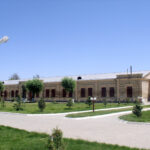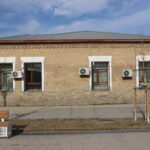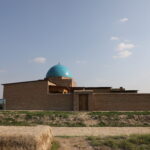
From 1980 to 1982, the Turkestan Archaeological Team conducted stratigraphic studies on the Kultobe hill, located on the southeastern outskirts of the Late Medieval Turkestan settlement. Previously, this was the basis for the assumption that the oldest layers of the city of Turkestan should be fragments of ceramics dated in Otyrar in the 7th century by the Turkic rulers, with the image of a lion with a raised tail on its face and the accidental discovery of copper money deposited on the next surface.
70 sq.m. During the excavations covering the territory, 6 construction horizons were cleared. A treasure consisting of silver and copper money was discovered under one of the burnt cubic bricks of a residential courtyard, consisting of 6 construction floors (3 tiers or, if you count, 2 construction floors). The burrow, without notches, is placed in a jar with an angob pattern. The remnants of the cloth stored on the pages of the money showed that the burial was packed in a jar with cloth.
This treasure has great historical significance not only as a numismatic complex, but also as a «chronological reference point», which determines that intensive life in the ancient city of Yasy–Kultobe ceased and the city center moved to the northwest in 300-500 m.
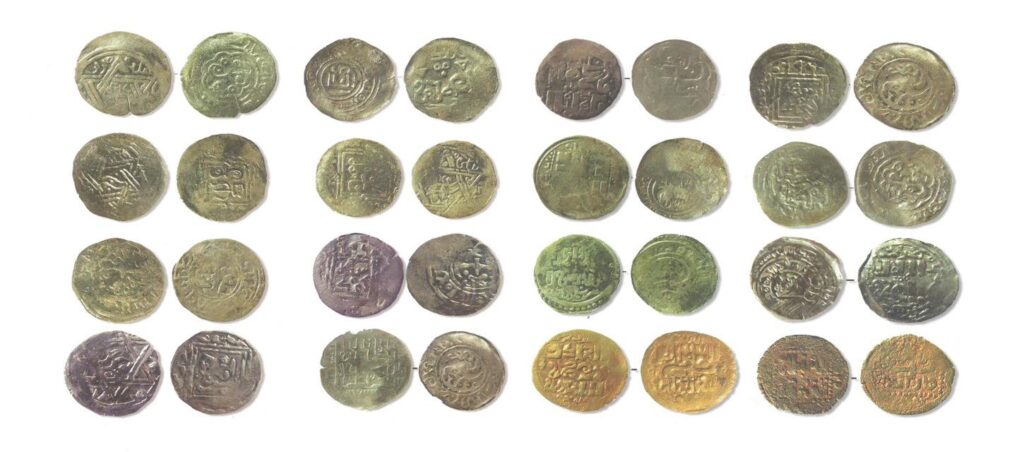
This treasure was accepted into the museum fund under the number KK2966 / 1-26. The treasure consists of money minted between the 677th. years (1278-1279) and 706. years (1306-1307). Among the small barns, consisting of 24 silver and 2 copper coins, there are products from most of the mints that operated during that period, in particular, the Almalyk, Andigan, Bukhara, Otyrar, Farab, Kashgar, Kenje, Mariginan, Samarkand, Taraz, Khojend, Shash, Yangi mints.
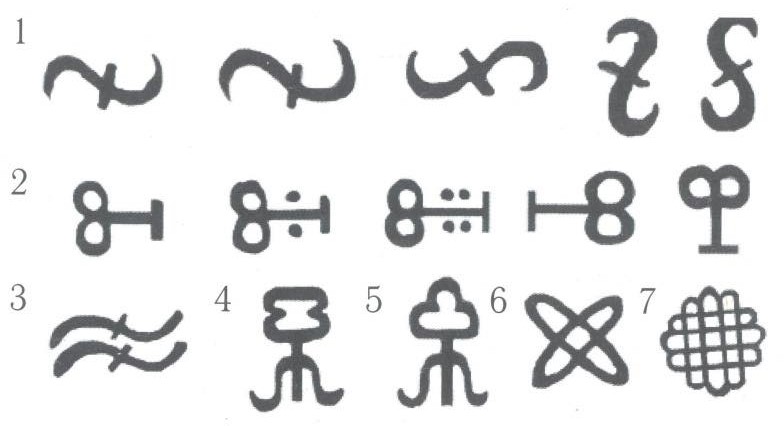
The types of coins of this period differ significantly from the samples of the mint of the Mongolian era in previous periods. On one of the faces of the coins, 7 different symbols were unloaded either individually or in two, and in some cases in three, identified by the research of E.A.Davidovich (for example, in the product of the Taraz mint as part of the treasure).
Types of symbols found on the pages of treasure money
All money was minted anonymously, without the name of any ruler. On the pages of money, only the name of the Islamic Caliph Nasr al-Din Allah, who died during this period, is found from the names of individuals.
In addition to writing the name of the Caliph, whose name is mentioned in coins, you can find the entries.مم (al-Adil al-orgam), اللمام الا .مم (Al-Imam al-orgam), as well as inscriptions on the money of Taraz and Kenjeh. The records of the names of the mints are represented by the definitions of ررب (Zarb) or سكة (sikka).
The study of this burial site, consisting of dirhams and copper fels of the Chagatai state, dating from the last quarter of the XIII century. The discoveries made in the archaeological site of Iasi-Kultobe in the early 14th century provided significant opportunities for determining the political and economic situation not only in the western part of the Chagatai state, but also in the entire state. The research conducted as part of the treasure revealed new types of products from Bukhara, Samarkand, Kenzhe, Marghinan, Taraz and Yangi mint and expanded the chronological indicators.
The content of copper money in the graves created conditions for the acquaintance of Otrar with new samples of copper money typical of this period and the money of the Farab territory.
Т.Zholdasov, researcher.