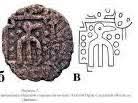
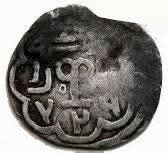
🔹 In the 13th century, coins minted in the lands of Central, Middle, and Minor Asia that had come under Mongol rule acquired distinctive features that set them apart from coins of earlier periods. One of the most notable of these features was the presence of tamgas stamped on the majority of coins.
🔹 Tamgas, as marks of ownership, have been used since very ancient times. Among nomadic peoples, they were applied to livestock, personal belongings, seals, boundary stones, and various other objects [1].
🔹 From the mid-20th century, the leading scholar of medieval Central Asian numismatics, Academician E.A. Davidovich, was one of the first who pay close attention to major peculiarities in the monetary system of the Chagatai state. By noting that these changes fundamentally transformed the region’s monetary circulation, he referred to them as an important monetary reform.
🔹 However, Davidovich pointed out that his conclusions regarding this period apply not to the entire region, but only to those areas on the eastern and northeastern banks of the Amudarya that had consistently been part of the Chagatai ulus [2, 3]. Therefore, it would be inaccurate to claim that his conclusions encompasses the full monetary system of the vast territory of the Chagatai state, which stretched from Ghazna to Otrar and from Khwarazm to Xinjiang [4].
🔹 Due to the comprehensive catalog compiled by P.N. Petrov based on a vast collection of coins from Xinjiang, Badakhshan, Termez, Ghazna, Khwarazm, as well as museum holdings, private collections, and online numismatic databases new and significant additions were made to the understanding of the monetary system of that era [5].
🔹 Before the arrival of Islam, many regions practiced the stamping of tamgas on coins. During the flourishing of Islamic civilization, this tradition nearly disappeared; however, in the 13th century, under Mongol rule, the long-term and systematic use of tamgas on coins was restored. Unfortunately, written sources that explain the reasons for the use of tamgas, their meanings, their connection to property rights, or rules governing their application have not been survived.
🔹 The integrated method used by P.N. Petrov for studying tamgas allowed researchers to determine their meanings and attribution to specific historical figures [6]. As a result, it was determined that in the Chagataid state, from 668/1269–70 to 765/1363–64, tamgas were systematically applied to coins. In no other state under the Mongol ruled state used tamgas on coins for such a long and continuous period.
For this reason, the numismatic material of the Chagatai ulus serves as a unique source for identifying which representative of the “Altyn Uryk” (Golden Lineage) each specific tamga belonged to.
🔹 The study of tamgas on Chagatai coins allows to understand the principles of state formation. Furthermore, tamgas (property marks) reveal the political and economic spheres of influence of their owners. For instance, the appearance of the personal tamga of Mongke Temur on coins of all minting centers of the Jochi Ulus beginning in 665/1266–67 signaled his independence from the Great Mongol Empire. Similarly, the stamping of the personal tamgas of Haidu (from the line of Ugedei) and Duwa (from the line of Chagatai), starting from 668/1269–1270, allows researchers to delineate the borders of two independent states.
🔹 Coins featuring the tamgas of both Haidu’s and Duwa’s tamgas at the same time (from the last 30 years of the 13th century and the beginning of the 14th century) became a major historical discovery: they reflected the points of intersection of their economic interests, which had previously remained a puzzle for historians. [7].
🔹 Without determining the reasons of tamgas and without accurately identifying them, it is impossible to treat coins as reliable historical evidence. Any conclusions made without this context are likely to be inaccurate. Even the absence of a tamga may point to significant political or administrative circumstances [8].
🔹 Following the monetary reform of Khan Toqta, which began in 709 AH (1310–11 CE), coins minted in the regions under his direct control were issued without tamgas, whereas coins bearing tamgas circulated in areas subject to independent political entities [9].
🔹 The next article will discuss the identification of individual tamgas found on coins minted under Mongol rule.
Т.Zholdasov, Junior Research Fellow.