The sacred mausoleum of Khoja Ahmed Yasawi in Turkestan is a golden pillar of the historical and spiritual memory of the Turkic peoples. Each stone, each pattern and inscription of this sacred complex is a trace of centuries-old history, a legacy of the past.
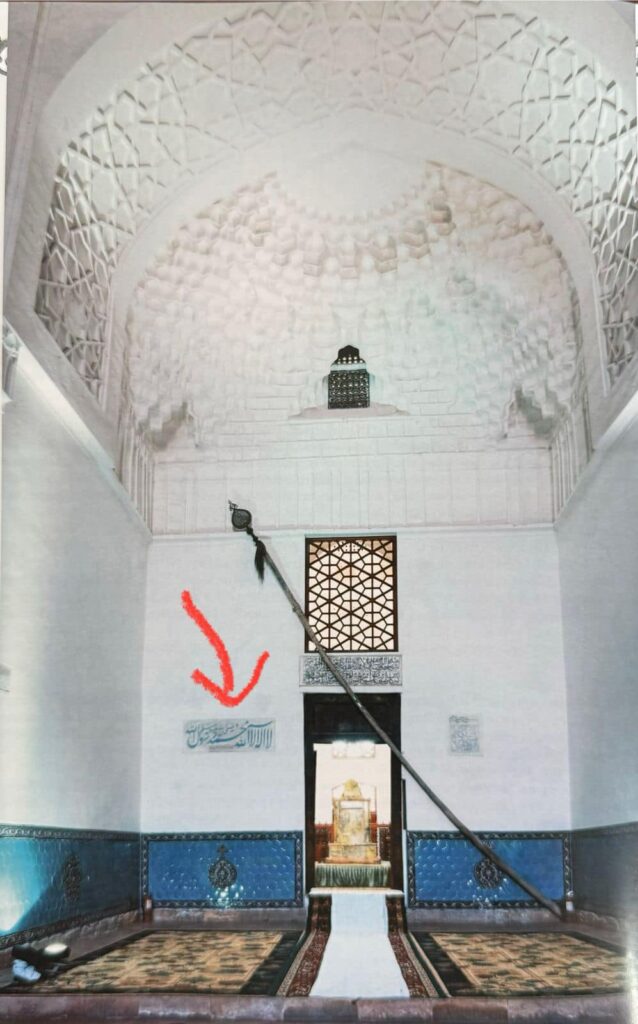
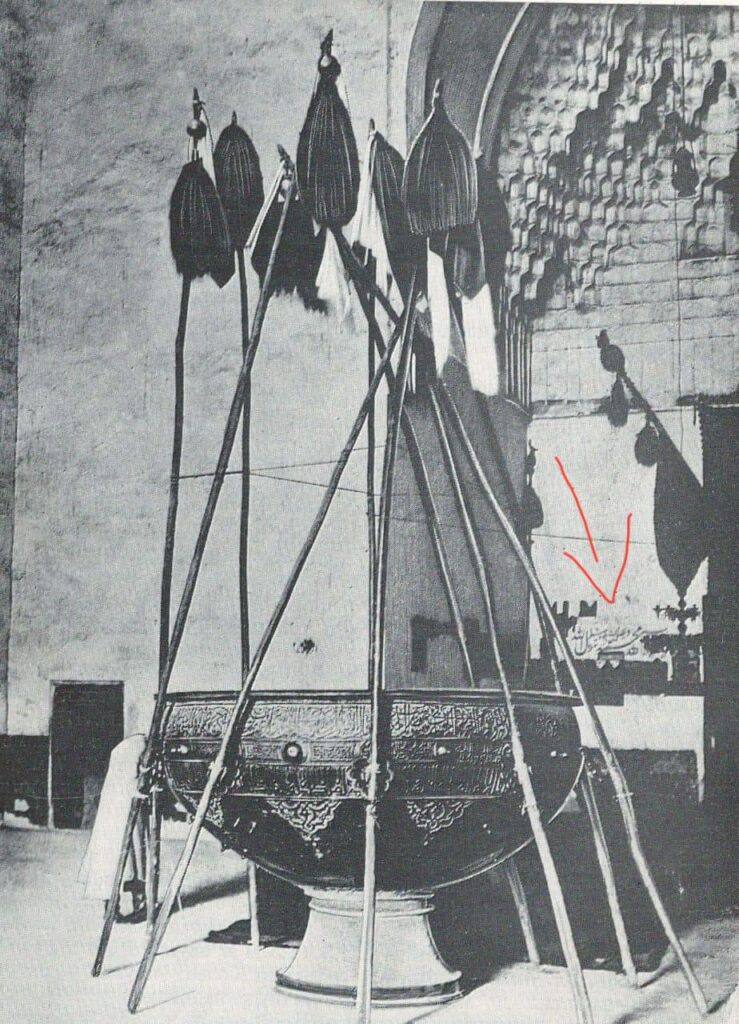
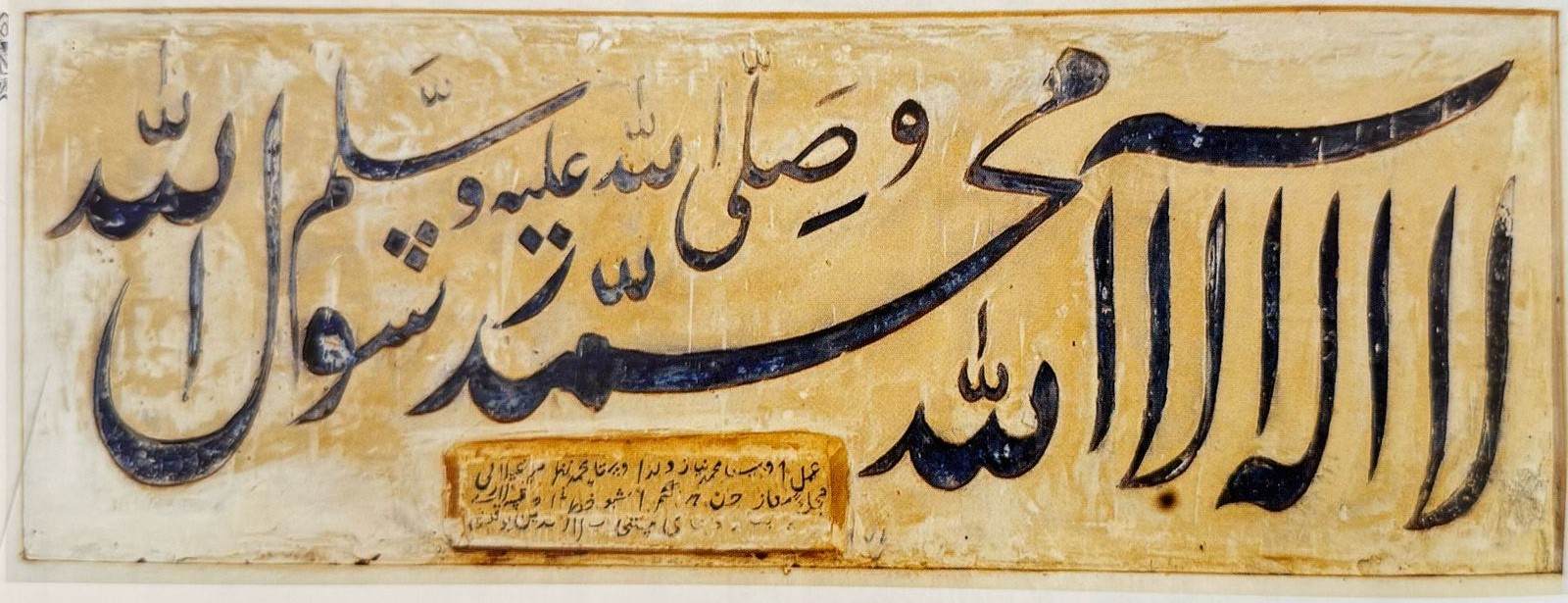
One of these unique artifacts is a ceramic tablet to the left of the tomb door. This board, on which the inscription is depicted, consists of two parts:
The first part: height — 57 cm, width — 160 cm. This is a large panel with the main inscription.
The second part: height — 10 cm, width — 40 cm. It is located at the bottom of the main board, in the middle. Its distinctive feature is a 0.5 cm protrusion. It is here that Kalima-i Tayyiba and blessings to our Prophet (peace be upon him) are written in elegant engraving.
The inscription is made in relief font in the style of nastaʾliq, that is, in the classical Turkic-Persian style of Islamic calligraphy.
Post content
The Arabic inscription contains the following text:
لا اله الا الله و محمد رسول الله صلى الله عليه وسلم، عمل اوستا محمد نياز ولد اوستا محمد نظر مرغيلاني محله معاز حبل هر کیم اشبو خط ني اوقسهلار من بر غریب ني دعای پستی بالالریمین بوقلغای
This text is translated into English as follows:
«There is no god but Allah, and Muhammad is his messenger.» Peace and blessings be upon him! Mu’az-i Jabal (a resident of the mahalla), it was made by the hand of the blacksmith Muhammad-Niyaz (Margilani), the son of the blacksmith Muhammad-Nazar. Whoever reads this, I pray that you and my children will remember me in secret and public prayers.
Such inscriptions are not only religious in nature, but also represent prayers representing the owner himself and wishing well-being to his descendants. This is a clear sign of the depth of faith and spiritual culture of the people of that time.
This inscription on the mausoleum of Khoja Ahmed Yasawi is a spiritual bridge connecting the past and the present. It preserves not only the beauty of calligraphy, but also the breath of the era, the hopes of the people, prayers and words of the heart entrusted to the next generation.
Abubakir Mollakanagat, research fellow at the «Azret Sultan» National Museum-Reserve