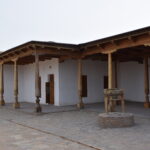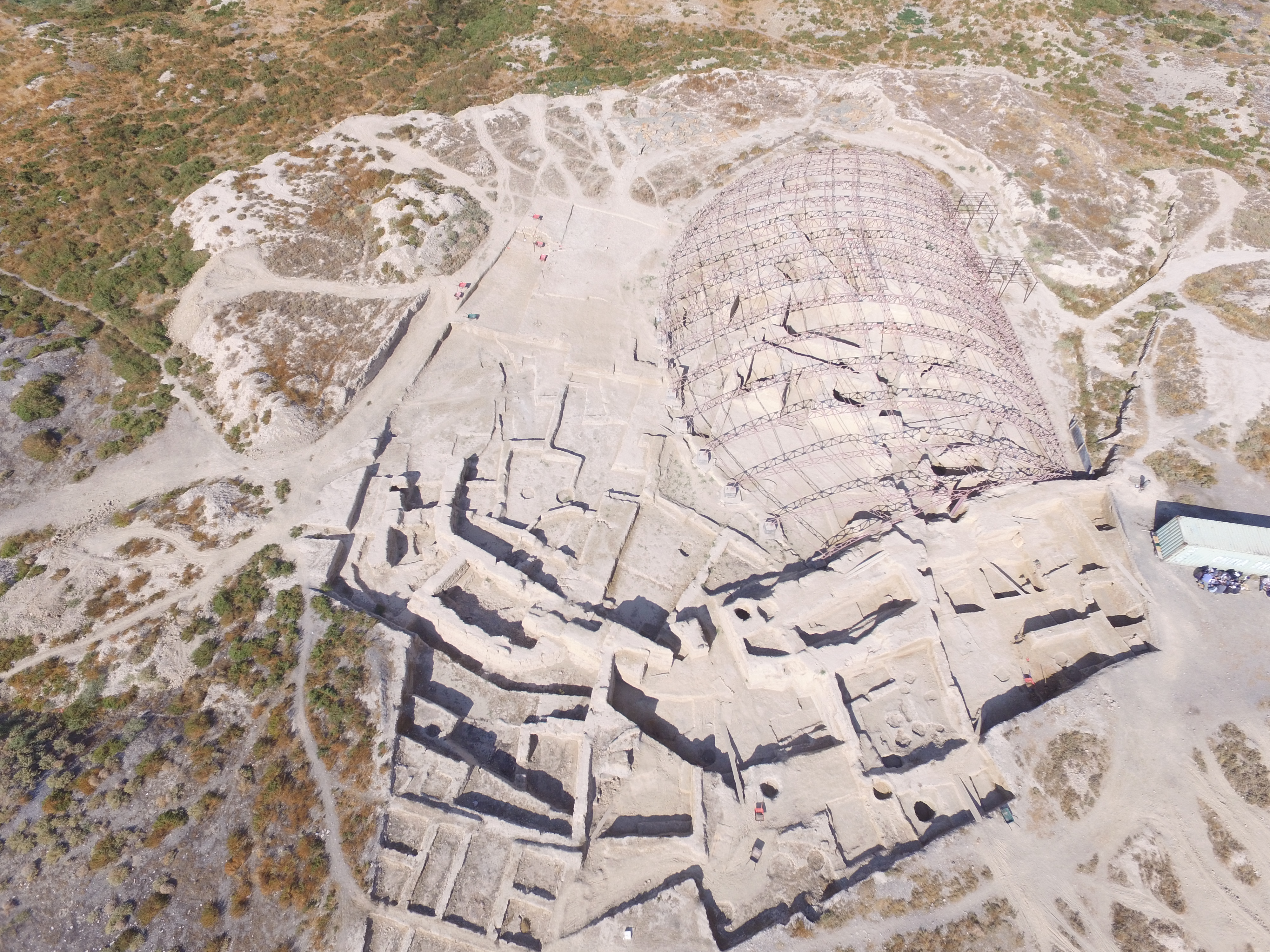
The archaeological excavations carried out in the city of Turkestan in the 1970s did not aim to determine the «age» of the medieval city. The first archaeological research on the territory of the medieval city was carried out for the purpose of restoring the main architectural object — the mausoleum/khanaqah of Khoja Ahmed Yasawi.
The first professional archaeologist to study the medieval city was Mikhail Evgenievich Masson. In 1928, the scientist used archaeological methods to determine the structure of the foundation, removing the “natural layer” that had accumulated inside the khanaka to the floor of the mausoleum. After that, no systematic archaeological research was conducted on the territory of the city for several years. The archaeological excavations that were conducted were aimed only at resolving issues related to the restoration of individual architectural objects located on the territory of the khanaka of Khoja Ahmed Yasawi.
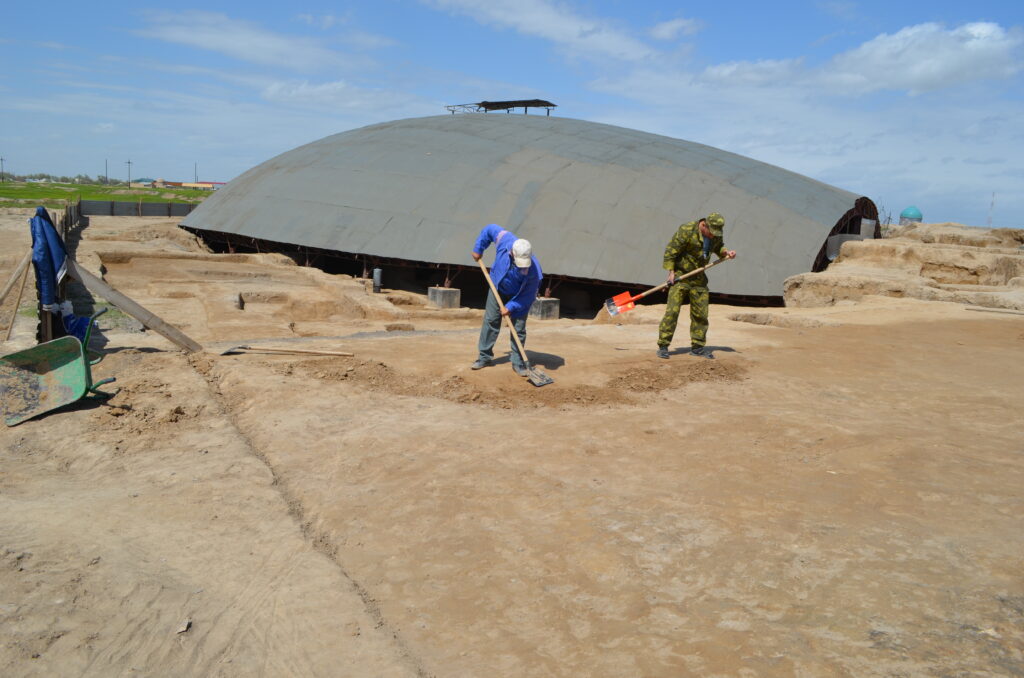
However, in the 70s of the last century, T.N. Senigova, in addition to fulfilling the assigned tasks for restoration, carried out work to implement the assigned tasks related to determining the cultural history of the entire medieval settlement. The archaeological group led by her carried out excavations in the area of the «Kokand Gate» in order to determine the oldest layer of the archaeological site of Kultobe. However, having begun excavations of the Yasy-Kultobe site, they were forced to stop the research, having reached a depth of 1.5-1.8 meters, without reaching the lower layer of the archaeological site, and came across an artificial stylobate.
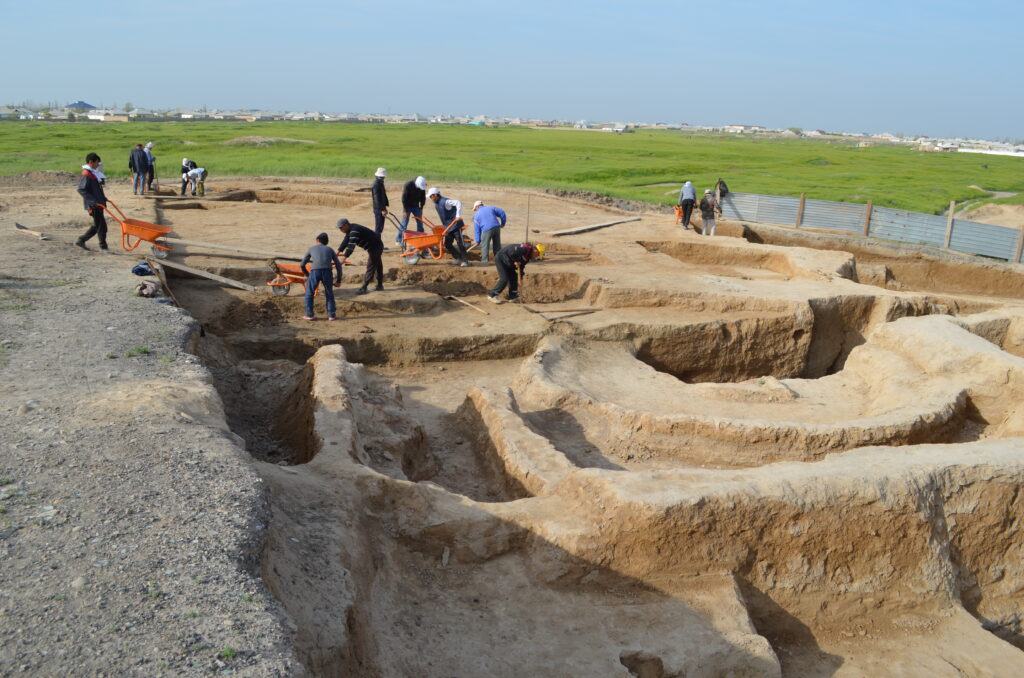
In the 1980s, excavations were resumed by order of the restoration department. In 1982, an archaeological team led by E. Smagulov, in addition to the «Restoration Program», conducted stratigraphic excavations on an area of 70 square meters outside the site where T. N. Senigova was conducting excavations. The excavations were carried out to a depth of 7 meters and reached the lowest «land». During the excavations, 7 cultural layers were discovered, and the resulting materials became the first scientific data on the «age» of the city.
The results of these archaeological excavations «updated» previously known information about the history of the city of Yasy-Turkestan by 700 years. Previously, there was no scientifically substantiated evidence, except for oral traditions, about the life of the city of Yasy before the 12th century, the time of Yasawi, and even convincing alternative versions of the location of the city of Yasy.
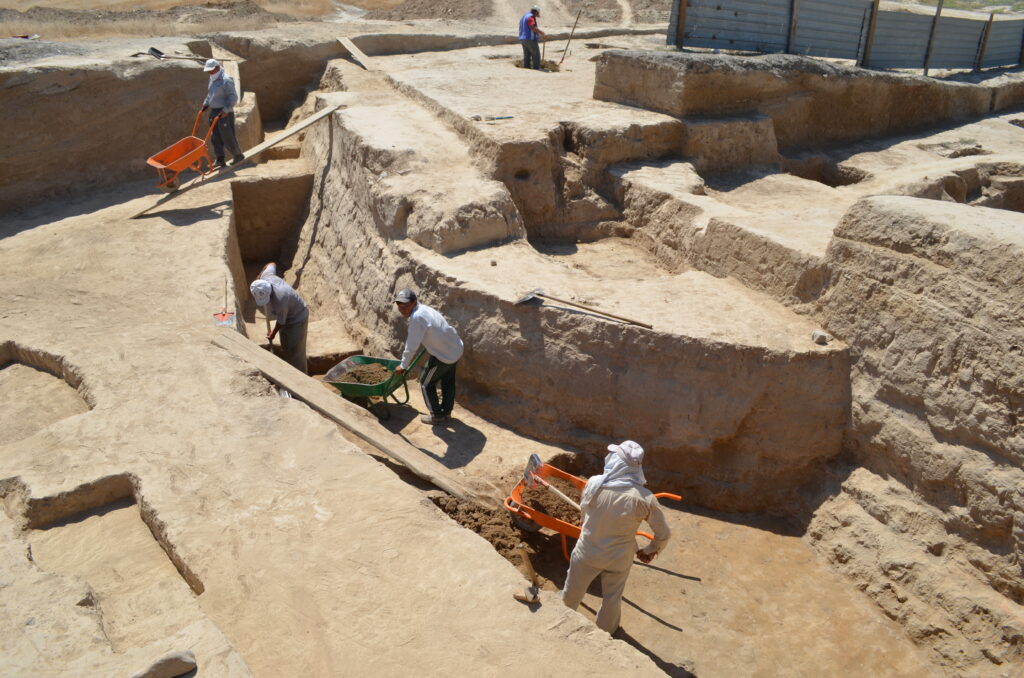
Archaeological excavations, annually conducted by the TAE «Yasi» under the leadership of E. Smagulov, who has been conducting archaeological excavations in Turkestan for more than 35 years, «refreshed» the history of the city by several hundred years. Based on the currently known materials on the history of the emergence and development of the city, it was determined that the citadel of the ancient city dates back to the first centuries BC (II-I centuries BC), that is, it is an archaeological and architectural site with a history of at least 2,200 years.
Т.Zholdasov, Junior Researcher