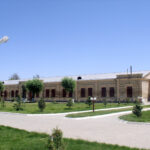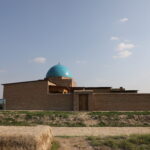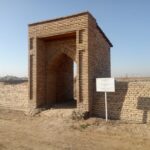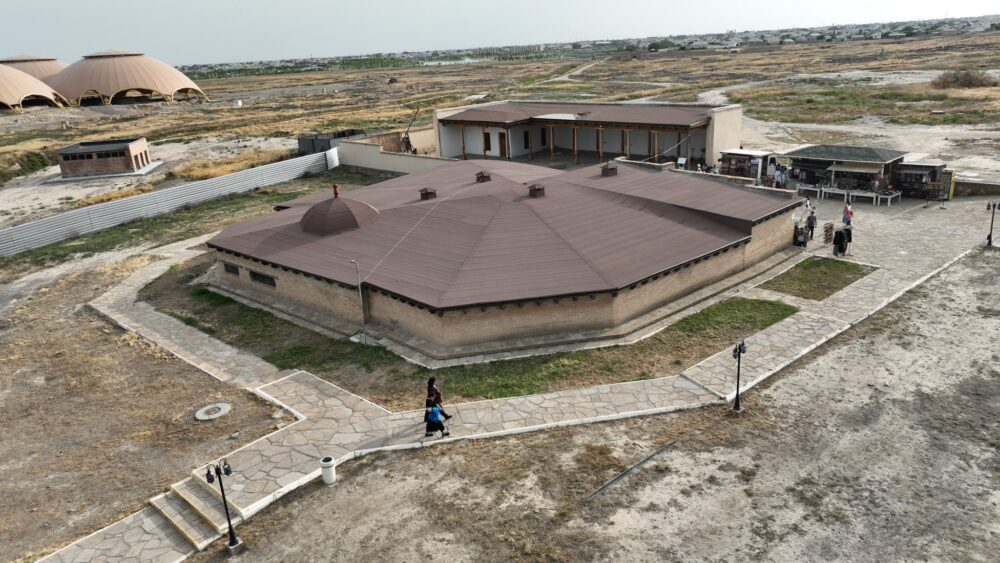
The underground complex “Qiluet” of the National Historical and Cultural Reserve-Museum “Aziret Sultan” is an outstanding monument of medieval architecture (12th–19th centuries) that plays a significant role in the study of the history of Turkistan and the Sufi tradition of Islam.
Museification work on the complex began in the late 1980s. During the Soviet period, views on Islamic history were shaped by atheist ideology. At that time, the museum’s research department was called “History of Islam and Atheism.” The department’s staff collected archival materials, oral testimonies of local residents, and other sources related to the history of Islam and the underground complex “Qiluet.”
In 1988, a thematic museum exhibition plan titled “The History of Islam and Its Dissemination in Southern Kazakhstan” was developed. To exchange experience, a study trip was organized to Leningrad (now Saint Petersburg) to the Kazan Cathedral, where museum specialists visited the Museum of the History of Religions and familiarized themselves with the exhibition of its Eastern Department.
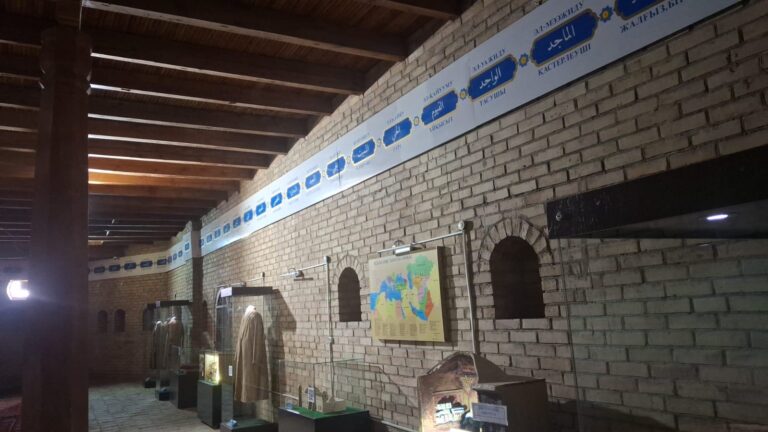
Practical museification began only in 1996–2000 following archaeological research by the Turkistan Archaeological Expedition. In 1996, an exhibition dedicated to the history of Islam and Sufism was created in Qiluet based on the museum’s existing collection.
A distinctive feature of the exhibition is the installation of metal plaques bearing the 99 Beautiful Names of Allah in Arabic script, with transliteration and translation into Kazakh, along the upper part of the walls in the Zhamagathan hall. In the Ghar (cell), plaques displaying the zikr (remembrance phrases) of the Yasawiyya order are placed around the perimeter of the room.
The exhibition is further complemented by panels with excerpts from Quranic surahs, the genealogical tree (silsila) of the Yasawiyya order, a map showing the spread of Sufi teachings, a painting depicting the zikr circle, and other exhibition materials. For nearly 25 years, these elements have retained their significance and have not been replaced.
In August of this year, the exhibition of the complex was expanded. A section of the underground structure, which had remained open despite previous archaeological excavations, was conserved and converted into a museum display. This new installation is dedicated to the household and culinary zone of the complex. It features 19th-century artifacts from the dining hall (Askhan) of the Khoja Ahmed Yasawi Mausoleum, including two large wooden bowls (astau) used for serving the festive porridge “Әlim botqasy,” ladles, and clay hums and jugs for storing grain and other products. Exhibition labels and annotation texts have been updated.
The next room of the complex is the utility hall, which in the past was used to store items necessary for religious rituals—such as firewood, water, household tools, and utensils. The space has now been cleared and prepared, and in the near future, a museum exhibition corresponding to its original function will be created there as well.
Author: R.S. Zhuzbayeva, Exhibition Organizer