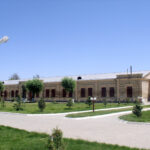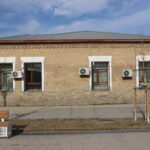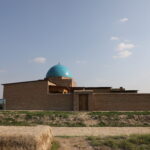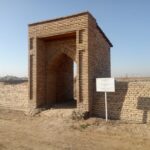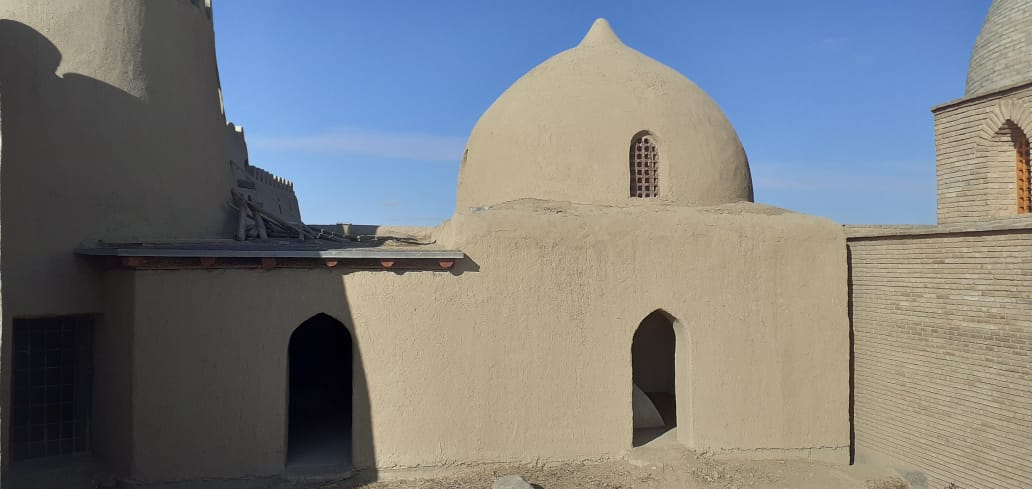
The Mausoleum of Baba Garip is located within the territory of the ancient city of Turkistan, near the “Zheti Ata” Gate. The structure is a single-chamber building. Coordinates: 43.2966198, 068.2621393. Archaeological excavations at the site were carried out in 2009–2010, and an old photograph of the mausoleum dated to 1910 has been preserved. In his book “The Truth about Sacred Places”, O. Dastanov recounts a legend. According to the story, a man from Turkistan set out for a pilgrimage to Mecca. However, he did not have enough funds for return journey. Exhausted and in despair, he came to the tomb of the Prophet Muhammad, praying and weeping. One day, before him appeared a stranger who said that at the next Friday prayer, a black horse would be tied to a certain tree, and its owner could grant any wish. The pilgrim went to the designated place, found the horse, took its reins, and waited for its owner. After the prayer, an equestrian appeared. The pilgrim pleaded with him not to abandon him and asked for help in returning home. Moved by compassion, the rider seated him behind, told him to close his eyes and then open them — and, in an instant, the man found himself in Turkistan.When the traveler asked the name of his rescuer, the rider, heading toward the Mausoleum of Khoja Ahmed Yasawi, replied, “I am Bab Arab,” and disappeared at that moment. Upon his return, the pilgrim recounted what had happened and built a mausoleum in honor of Bab Arab at the very place where they had appeared.
In 2011, during restoration of “Zheti Ata” Gate, archeologists discovered a wall of the mausoleum built of adobe bricks, remains of the foundation of the Bab Arab Mausoleum and fragments of the floor paved with fired bricks. At the center of the structure was a tomb complex made of fired brick, measuring 3.25 x 1.7 m and about 1 m high. The tomb was surrounded by a brick-paved floor measuring 4.5 x 4.6 m. The brick surface had been coated with black clay plaster several times, and later with sand and lime plaster. The walls of mausoleum was built from so-called “royal bricks” measuring 25.5 x 13 x 6.2 cm, characteristic of the 19th century. The floor bricks measured 23 x 24.5 x 5 cm and 24.5 x 24.5 x 5 cm. The external dimensions of the mausoleum are 5.75 x 5.5 m, the entrance located on the southeast side. The preserved photograph dated to 1910, clearly shows that the walls and dome of the mausoleum were built from adobe brick and covered with a thick layer of black plaster. The overall height of the structure, including the dome, was approximately 5 meters. The bricks laid on the floor of the mausoleum paid particular interest, according to researchers they belong to an earlier period, approximately 14th–15th centuries.
Today, the descendants of Bab Arab lived in the city of Kyzylorda and its surroundings. According to now deceased representative of the family, Zholdybayev Ötegen Ysqaquly, Bab Arab was also known by the names Baba Garip and Baba Arab Ata. His real name was Sabyr Malik. Relatives say that the family keeps a “Nasabname” (genealogical book) confirming the saint’s lineage.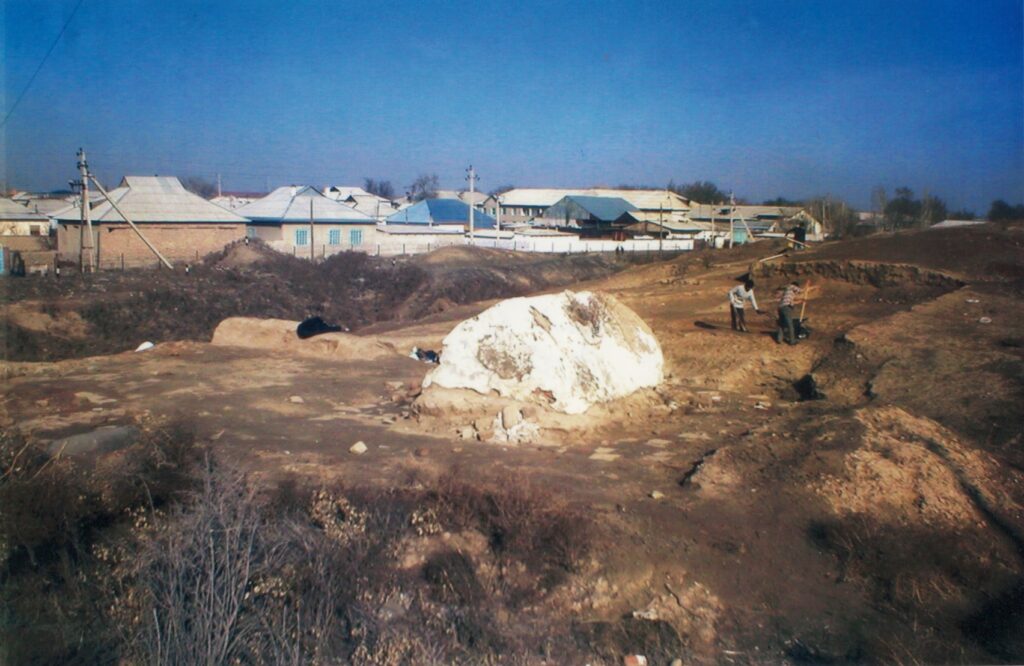
References:
- Тұяқбаев М., Өсеров Т., Күмісбаева Ұ., Мұсабаев Қ. Түркістан қаласының Жеті ата қақпасында 2011ж. жүргізілген археологиялық қазба жұмыстарының есебі. Түркістан, 2011. Ескерткіштерді қорғау бөлімінің архиві.
- Мұсабаев Қ. Баб Араб мешіті мен кесенесі орнында жүргізілген археологиялық зерттеу// «Қазақ хандығының тарихындағы Түркістанның орны» атты халықаралық ғылыми – теориялық конференция материалдары. Түркістан, 2015. 279-285 бб.
- Баба Араб әулие // «Әзірет Сұлтан» энцеклопедиясы. Түркістан, 2021. 83 б.
- Дастанов О. «Әулиелі» жерлер туралы шындық. А., 1967.53-54бб.