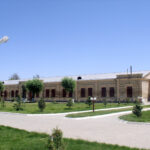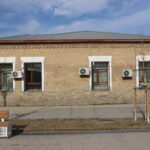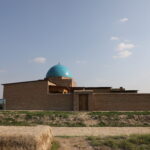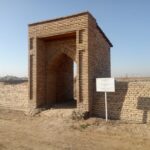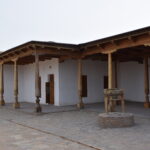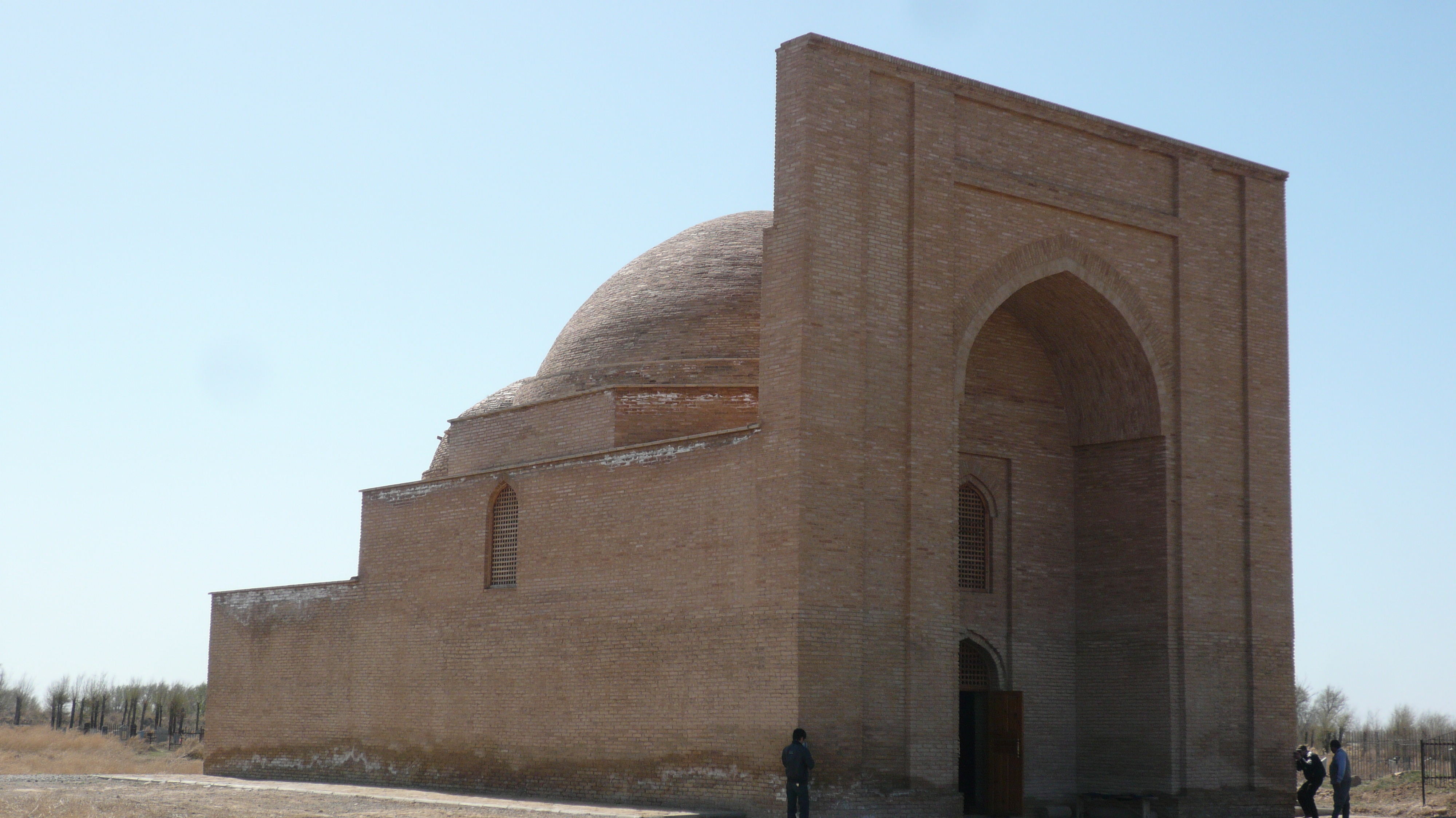
The Mausoleum of Zhusip Ata is located in the village of Yeski Ikan in the Sauran District, 25 km from the city of Turkistan. Coordinates: 43˚10.682΄, 068˚32.082΄. It is a monument of national significance, dedicated to Zhusip Ata, a contemporary and disciple of Khoja Ahmed Yasawi. There is not much information preserved about him, but according to legends, sayings, and accounts from local elders, the people referred to Zhusip Ata as “Gashyk Zhusip” which means “one who is deeply in love with God”.
According to documents from the personal archives of Saydalim Yuldash Nuriddinuly, a local resident of Ikan village, have been discovered several pieces of information about Zhusip Ata. Based on these sources, it is believed that Khoja Ahmed Yasawi served as the akim of the city of Yasy at that time. By his order, Zhusip Ata was sent as a representative to the Ikan village. At that time, Zhusip Ata was known throughout the region for his grapes. When Ahmed Yasawi visited Ikan, Zhusip Ata offered him twelve different varieties of grapes. Zhusip Ata was recognized as one of the great Sufi saints due to attaining the highest level of spiritual perfection. According to local elders, Zhusip Ata mausoleum once housed a vast collection of religious books. Unfortunately, after the establishment of Soviet rule, many of these books were destroyed by fire. However, the tombstones of the individuals buried inside the mausoleum have been fully preserved. These include the tombstones of Sabyr Ata, Kurban Ata, Khalil Ata (son of Zhusip Ata), Zhusip Ata himself, Ibrahim Ata, Abdijalil Ata, Asan Ata, and Abdul Aziz Ata.
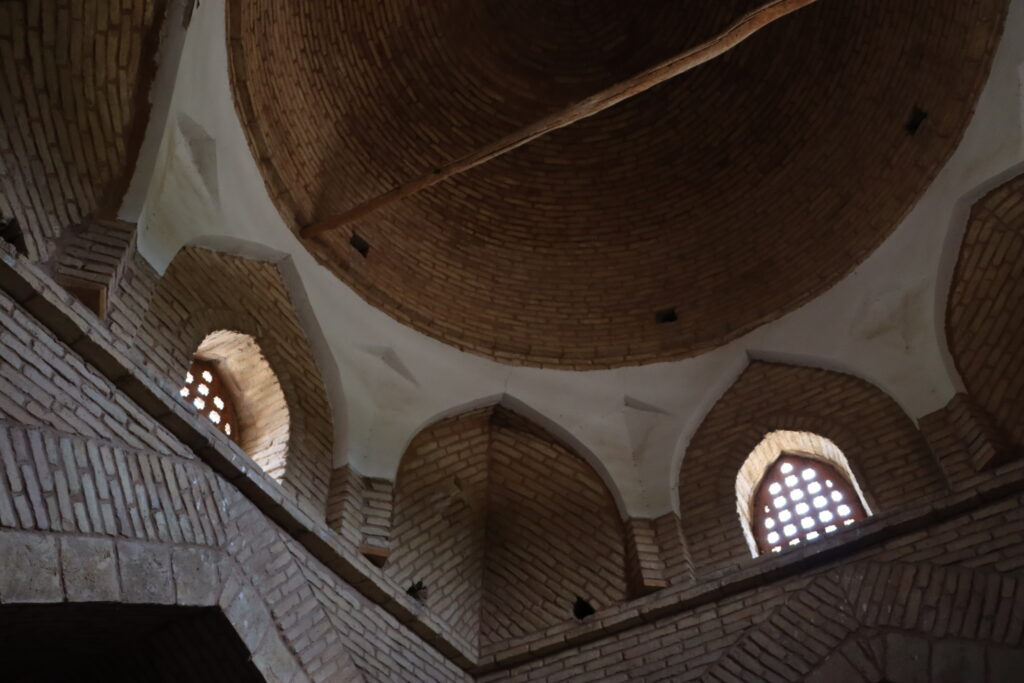
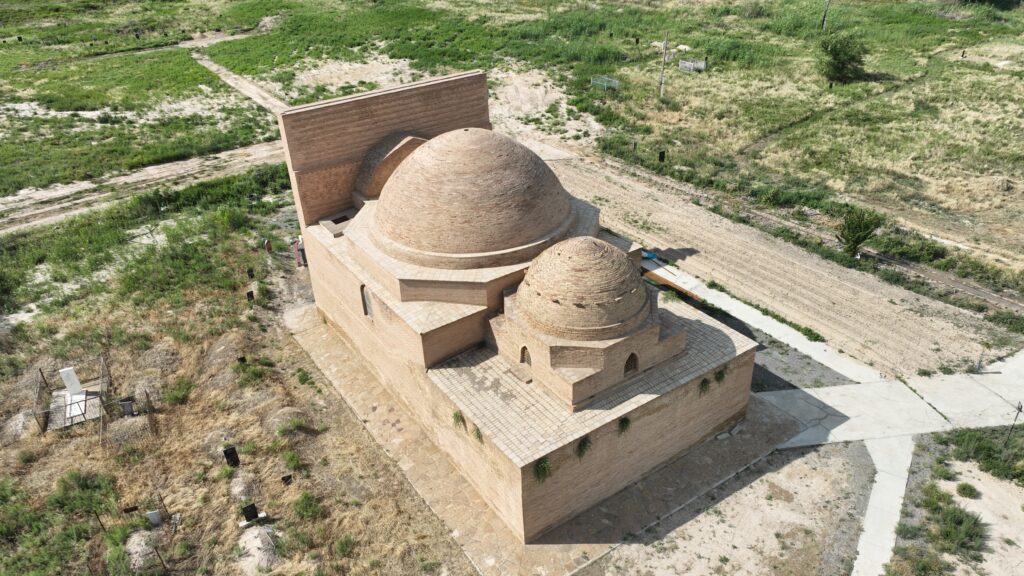
In 2007, archaeological research led by archaeologist Marat Tuyakbayev confirmed that the mausoleum was constructed in the 15th century. As a result, were fully restored the mosque dome and the peshtak (entrance portal). Originally, the mausoleum consisted of only two rooms: the Qabirkhana (burial chamber) and the Zhamagathana (prayer or gathering hall). In the early 20th century, local residents added a third room — the Ashkhana (kitchen). The dome and ceiling of the Zhamagathana have not survived in their original form, but the Qabirkhana has completely remained intact. The mausoleum’s original dimensions have been well preserved, and its foundation — made of six layers of brick masonry which is also in good condition. The structure consists of two domed rooms: the Qabirkhana and the Zhamagathana. The total length of the mausoleum is 14.2 meters, the width is 12.8 meters, and the height reaches 13.5 meters. Between 2008 and 2010, were carried out restoration works by the state enterprise “Kazrestavratsiya” to preserve and restore the mausoleum of Zhusip Ata. During the archaeological excavations in 2007, researchers noted that the bricks used in the construction of the mausoleum measured 27x27x5 cm and did not resemble the type of bricks typical of the Russian Empire period. Moreover, scholars pointed out the considerable age of the wooden elements used in the pylons of portal and the staircase leading to the upper part of the building. These findings refute the assumption that the mausoleum was entirely reconstructed in the 20th century.
The Mausoleum of Zhusip Ata is a valuable historical and architectural monument, erected in honor of a disciple of the great poet and thinker Khoja Ahmed Yasawi. Its architectural design and spiritual significance make it an important site of cultural heritage. The mausoleum location along the international highway “Western Europe – Western China”, which leads to the Mausoleum of Khoja Ahmed Yasawi, creates favorable conditions for tourist visits. According to abovementioned account of Saidalim Yuldash Nurshiddinuly, one of the miracles of Zhusip Ata is the legend of how he helped Zholbarys Khan, who had arrived from the city of Sham (Damascus) with 99 followers, to cross the Syr Darya River. The great Islamic scholar and Sufi spiritual mentor from the city of Sham (Damascus), Baba Samit, heard about fame of Khoja Ahmed Yasawi. However, apparently he received distorted information. Then the ruler of those lands, Zholbarys khan, decided to “correct” the preacher and set off to Turan, together with 99 disciples and same number of mules laden with books. Upon reaching the western bank of the Syr Darya, they were unable to cross the full-flowing river. When Ahmed Yasawi learn about approach of Zholbarys khan, he sent his disciple Zhusip Ata, to meet the guests. Zhusip Ata recited a prayer and struck the water with his staff, miraculously parting the river to form a passage. The entire procession crossed safely to the other side. They stopped at Maslikhat Tobe, an area near Otyrar, where Zholbarys khan summoned Khoja Ahmed Yasawi and his disciples for a theological debate. On the appointed day, both sides gathered at the top of the hill and began the spiritual contest. However, Khoja Ahmed Yasawi deprived his opponents of the ability to speak or recall their knowledge through the power of prayer. When they opened their books to find answers, they could not find a single inscription. Amazed by the miracle, Zholbarys khan admitted defeat, shook hands with Ahmed Yasawi, and staid in Yasy to study his teachings. Later He passed away and buried in the 12th century at the site of the present-day mausoleum. In the 14th century, during the construction of the large complex by the order of Amir Timur, his grave leaved in the corridor between the mosque and the library. It enclosed with a wooden lattice, covered with a tiger skin, and adorned above with the skulls of arkhar (wild mountain sheep).
Among people exists a common misconception that the grave near the mausoleum of Zhusup Ata belongs to Zholbarys khan, the ruler of the Senior Zhuz. However, this assumption is incorrect. The prominent orientalist M.E. Masson, who studied the site in 1928, clearly refuted this belief, stating: “…the saint Baba Samit Yulbars khan, whose grave was located here before the construction of the Timurid-period mausoleum.” This clearly indicates that the burial predates the lifetime of the Kazakh khan Zholbarys and, therefore, cannot belong to him.
During his lifetime, Zhusup Ata was held in great esteem by the people as a saint and respected figure. According to a popular tradition, when Khoja Ahmed Yasawi once visited him, he said: “Your lineage is sacred and endowed with miraculous power. In the fourth generation from you, will be born Kamal al-Din Sheikh who will become a revered and saint man”. These words proved prophetic. A descendant of Zhusup Ata, Kamal Sheikh Ikani, became a renowned scholar and spiritual mentor, widely respected throughout the Turan as a follower and continuer of the teachings of Khoja Ahmed Yasawi.
References
- Tuyakbayev M. Report on the results of research conducted by the Ikan Turkestan archaeological expedition at the Zhusup Ata mausoleum in 2007 — Turkestan, 2007.
- The Zhusup Ata Mausoleum, 12th–14th centuries // Historical and Cultural Monuments of the Turkestan Region — Almaty, 2016 — p. 26.
- Zhusup Ata Mausoleum, 12th–14th centuries // Historical and Cultural Monuments of the Turk-Ata Mausoleum // Encyclopedia “Azret Sultan”, Vol. I — Turkestan, 2021. — p. 154.
- Zhusup Ata Mausoleum // Encyclopedia “Turkestan” Vol. I — Astana, 2023. — pp. 82–83.
- Masson M.E. The Mausoleum of Khoja Ahmed Yasawi — Tashkent, 1930. — p. 25.