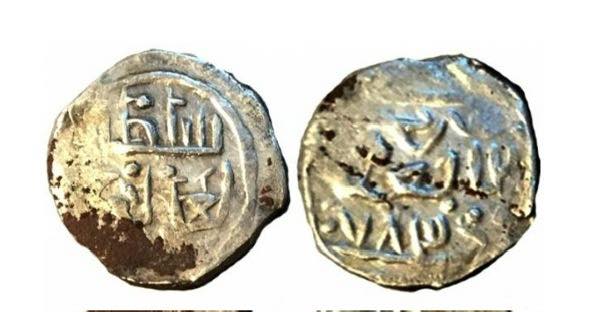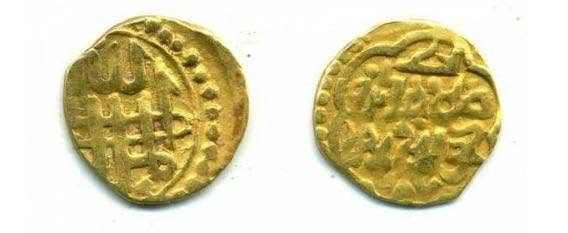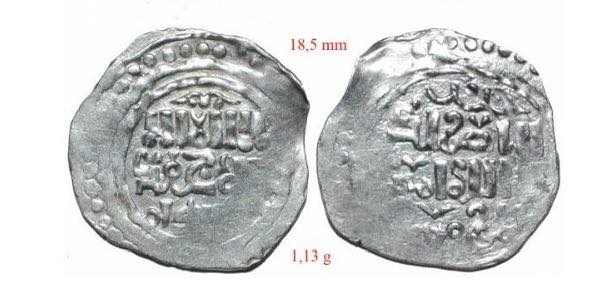
were directly related to the political, economic, and cultural development of the region. Coins minted in Central Asia often featured inscriptions in Arabic, Persian, and Turkic languages. The evolution of the monetary system in these territories is divided into several historical stages, each characterized by changes in coin types, minting techniques, designs, and inscriptions.
Gold and silver coins featured the names of rulers, the year of minting, the name of the mint, and the state symbols. On copper and bronze coins, which were not made from precious metals, auxiliary inscriptions as well as images of flowers and animals were more commonly placed.
In the Middle Ages, coins were primarily minted from three metals: gold, silver, and copper. The names of the coins varied depending on the metal from which they were made. In Central and Middle Asia, gold coins were called “dinar”. The dinar is an Islamic-style coin, first introduced to the region with the arrival of Islamic culture under the Samanid dynasty. From the 18th century until the early 20th century, this name was also applied to coins made from other metals. Later, starting from the late 15th to early 16th centuries, copper coins with same value were also called “dinar”, reflecting a broadening of the term as monetary systems evolved.
The main silver currency unit was the “dirham”. Like the dinar, dirhams entered the monetary circulation of the region during the era of the Samanid and Karakhanids.
In medieval Central Asia, copper coins were called “fels”. Starting from the 15th century, the term “fulus” the plural form of “fels” began used to donate copper coins. These copper coins under this name remained in circulation until the beginning of Soviet rule in the region.
The term “pūl” became slang for copper coins in everyday life in Central Asia through a process of linguistic adaptation and widespread usage. Originally derived from the Arabic word “fulus”, which referred to small copper coins, “pūl” was first used as the official name for copper coins minted by states such as the Golden Horde. Later, in the Bukhara Emirate, Kokand and Khiva Khanates – even when the official minting names stayed as “fulus”. This continuity helped cement “pul” as the everyday word for copper coins.
А.Baimenova, Collection Curator