One of the main products of traditional Kazakh craftsmanship is metalwork. This art dates back to the Bronze Age, around the 2nd century BC, among the Saka-Sarmatians, Usuns, Kangly, and Huns. In the nomadic lifestyle of the Kazakh people, metal items were handy and practical, metal ones were replaced gradually ceramic dishes. In the Turkic-Mongol states, iron objects suitable for a nomadic way of life were highly valued.
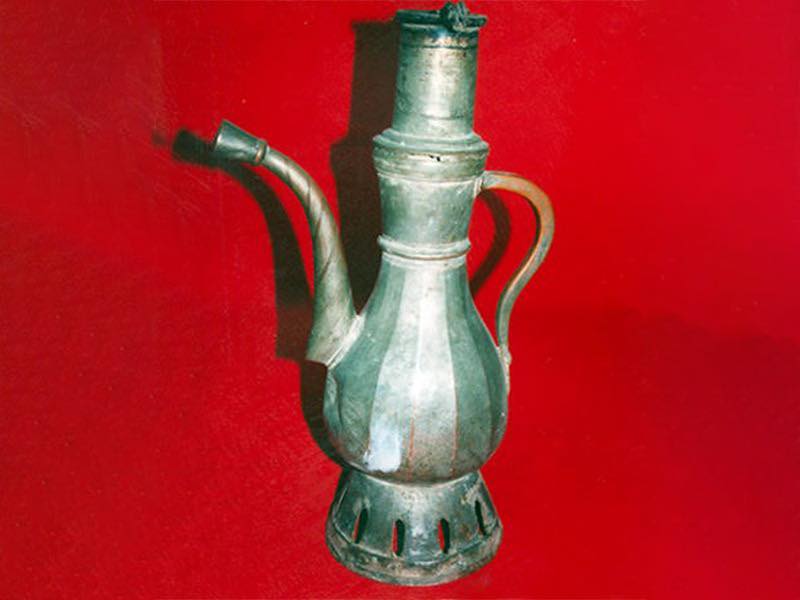
In collections of the National Historical and Cultural Museum-Reserve “Azret Sultan” houses several types of kumans of the 19th–20th centuries. Most of them are made of copper, brass, cast iron, metal, and clay. Alongside these traditional kumans, the museum also holds a unique exhibit — the kuman-samovar, which serves both a kuman and a samovar.
The word kuman in work of Mahmud al-Kashgari “Dīwān Lughāt al-Turk” refers to a jug, bottle, or glass vessel. It originates from the Persian word khum, with kuman being the plural form. In Arabic, this word denotes a vessel for wine or drinks. There are also sources indicating that the word samauryn (samovar) derives from the Russian word samovar.
The Lisitsyn masters of the Tula arms factory opened a workshop in 1778 and began producing samovars. Samovars appeared in Russia in the second half of the 18th century, and Kazakhs began using them in the 19th century. At first glance, the kuman-samovar resembles a kuman (a traditional Kazakh water container), but its distinctive feature is the presence of a fire chamber in the center.
In the works of zhyrau-traditional poet-singers there is evidence of the samovar was widely used in the everyday life of the Kazakh steppe. For example, Mashkhur Zhusip wrote:
Tents were set and all prepared,
Blankets, rugs — with flowers flared.
Samovars in rows were steaming,
Kumis, shubat — all was gleaming.
And in Akhtan Kereiuly’s work “Kazakh Custom”:
The samovar would bubble loud,
Never left the fire’s shroud.
With baursaks, fruits, and sugar sweet,
There was no other drink but tea to greet.
When guests arrived — a sheep was slain,
The cauldron boiled again and again.
In summer by the river’s side,
A traveler came with eventide —
The samovar was set to brew,
Its warming steam — a welcome too.
In ancient Eastern writings, it is stated “Tea is a wondrous drink — it lifts the spirit, relieves fatigue, lightens the body, brings new thoughts to mind, sharpens understanding, and gives the strength to overcome difficulties”. The word samauyryn (samovar) is believed to originate from the ancient Turkic term sumaver, meaning “water boiler”.
A.Urkinbayeva, Research Associate.