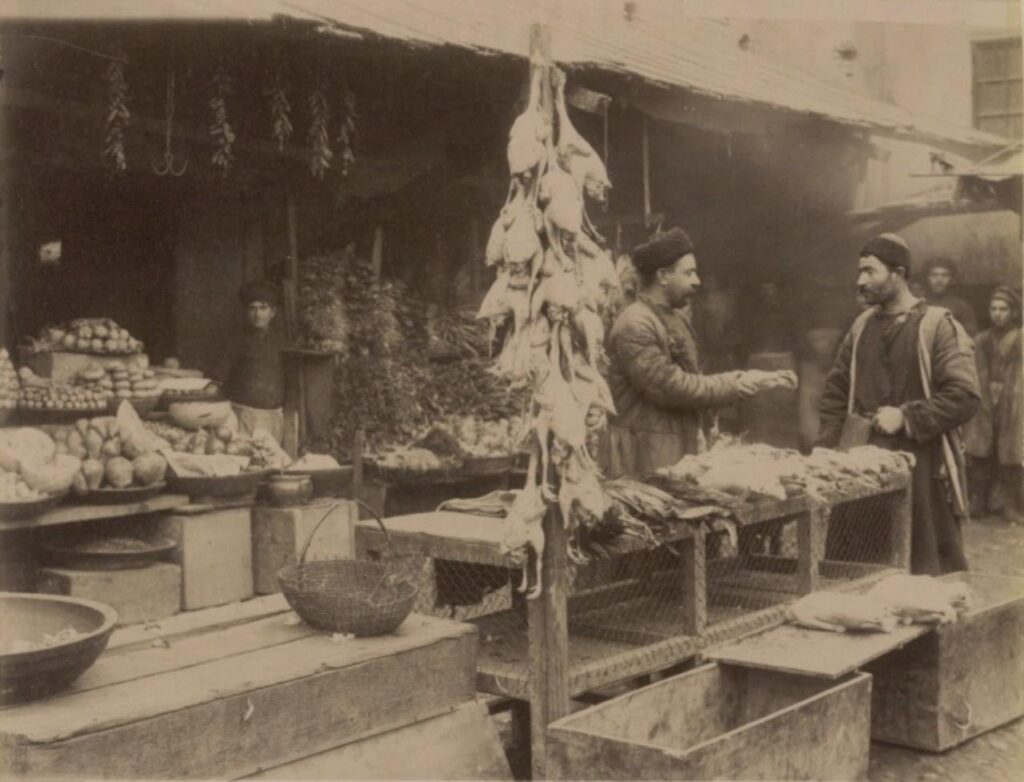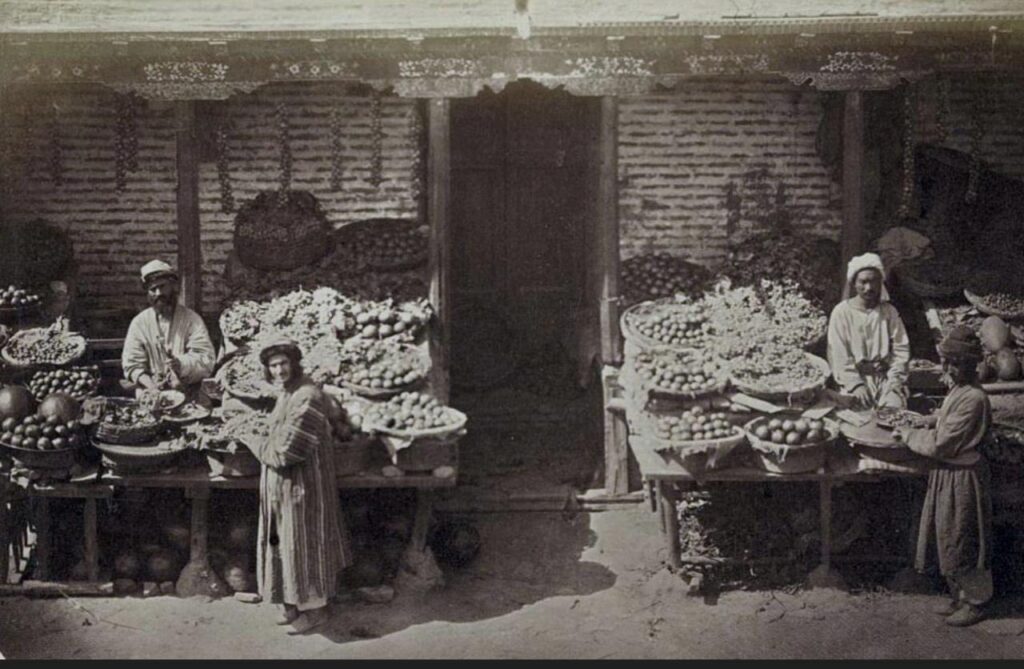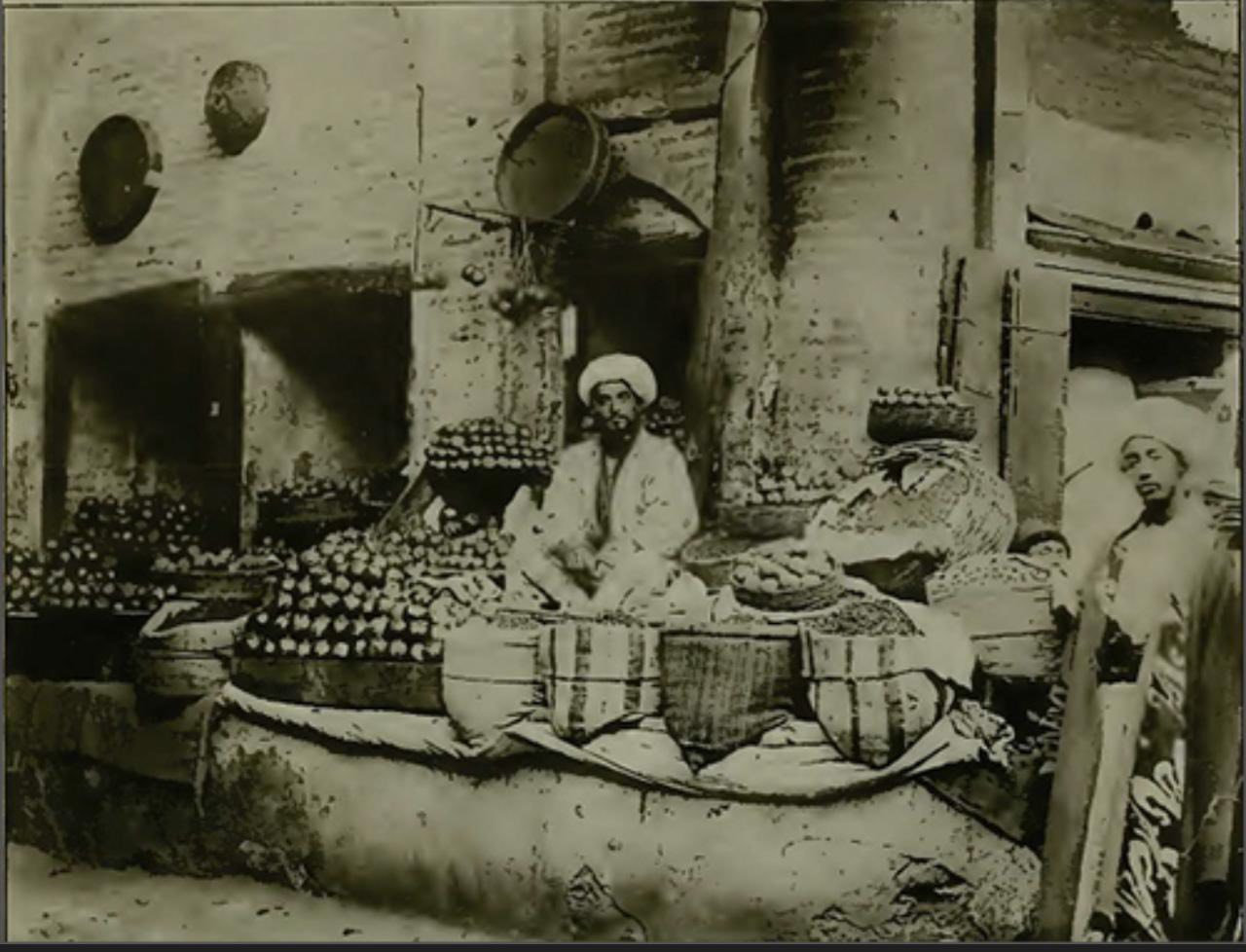
The famous scientist and architect G.A. Pugachenkova writes that there were five types of markets in Central Asia: the first was a market in the form of a row of shops along the main street, this street-market began near the western corner of the mausoleum and stretched to the gates of Zhety Ata. The market of Zhety Ata street: in addition to shops, there were also teahouses, canteens and hotels along the street. On the walls on both sides of the street, thin logs lay horizontally, covered with a mat woven from reeds. Each store owner was obliged to sprinkle water on his territory, sweep it and cover it with a roof.
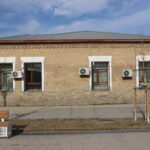
The second such street-market is «Zheit-Rasta». This market stretches from the current S. Erubaev Museum to the Musalla Gate. The word «Zheit-Rasta» means «a row of Jewish shops». These traders mainly sold Russian industrial goods. «Among them were the Davydov brothers, the Borukhovs, the Maksheyevs, the Mullachayevs, the Aminovs, the Khaitovs and others, who stifled local traders with their trade,» writes researcher A.I. Dobromyslov in his work «Cities of the Syrdarya Region. Shymkent, Turkestan». Previously, this street was called Abay Street, now it is known as Amir Temir Street. Some houses survived until the 1980s, one of these houses, built of burnt brick, housed the city dental center, another — a children’s music school, residential buildings, etc.
The third type of bazaar is the charsu bazaar, located at the intersection of streets, with gates on all four sides and a covered roof. The fourth type is a separate bazaar, with a roof covered with arches and domes. There is no evidence that these bazaars existed in Turkestan.
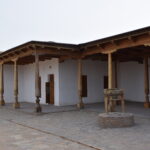
The fifth is the Tim Bazaar, consisting of trading halls and canopies. This bazaar was excavated by archaeologists in 2021. On each side of the square bazaar measuring 60x53x51x59 meters, there were 17, 16, 13 and 16 shops. Their doors opened onto the courtyard, and their entire front facade was covered by a canopy along its entire length. The market is located 100 m southwest of the Kilvet Mosque.
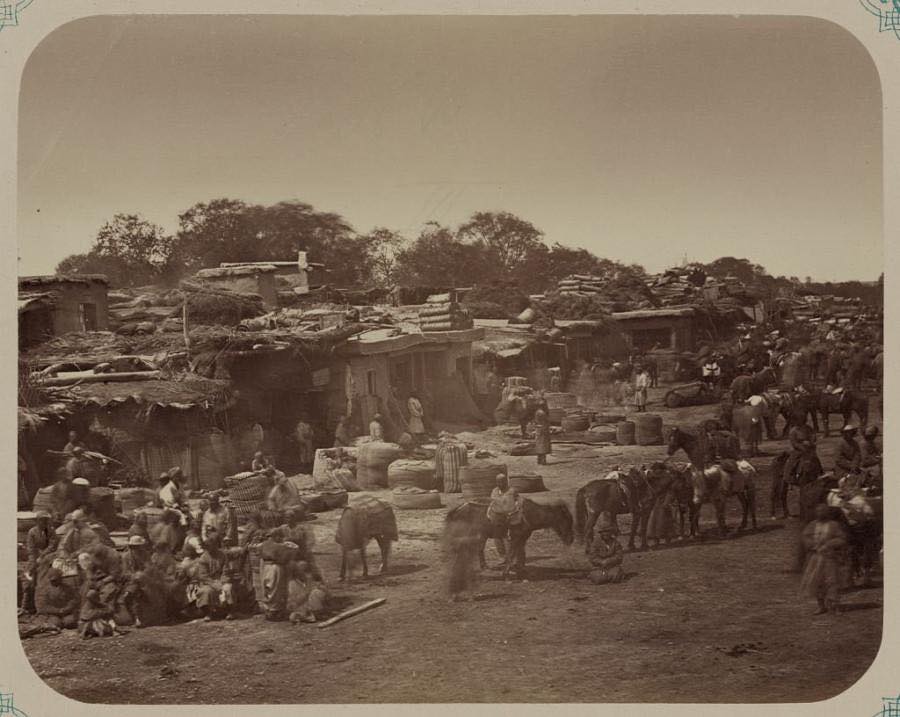
In addition, outside the city there were markets for livestock, agricultural implements, household needs — carts, cart wheels, frames and doors of yurts, as well as livestock products — wool, fur, agricultural and horticultural products — wheat, barley, oats, cotton, etc., and «green» markets, where fruits, berries, melons, watermelons, pumpkins, etc. were sold wholesale and from carts. The largest of them was located on the current Yesim Khan Square and around it.
In the courtyards of the caravanserai, they mainly traded foreign goods.
Archaeologist, candidate of technical sciences M. Tuyakbaev