For the Kazakh people, «Yrystyn basy – kara kazan», «oshak», «otbasy», «kazan» have always been considered sacred. Kazan being a simple kitchen tool, is revered as a symbol of prosperity and unity, unity and solidarity, and the integrity of the family. The Kazan which is not removed from the fire, has long been considered a powerful and blessed family.
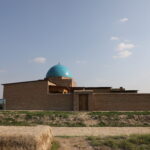
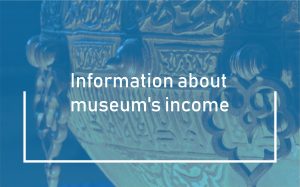
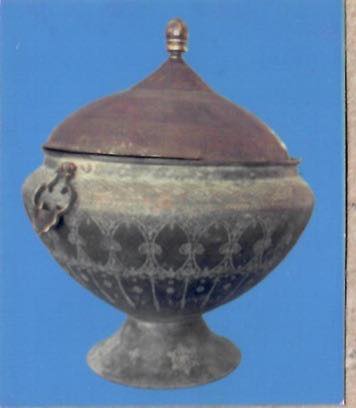
Turkestan undoubtedly represents, first of all, the mausoleum of Khoja Ahmed Yasawi and Taykazan. One of such valuable legacies is the famous Taykazan, cast by order of Amir Temur and preserved inside the mausoleum. Today, in addition to the Taykazan, the museum’s collections contain several types of boilers used in everyday life. One of them is a boiler registered under inventory number No. 3092. According to the research of specialists from the A.Margulan Institute of Archaeology, this relic dates back to about the XVI-XVII centuries. It is similar in shape to the Taykazan in the mausoleum of Khoja Ahmed Yasawi, with two handles and a lid cast from copper. Previously, visitors to the mausoleum bought cauldrons of this type from local craftsmen as souvenirs.
According to ancient knowledge, Kazan is a symbol of prosperity and peaceful life, abundance and well-being. Kazakh traditions and rituals were passed down from generation to generation and did not destroy the educational value. Therefore, our people did not turn over and did not break the cauldron for no reason. It was believed that the fracture of a cauldron was the ruin of a family, and its overturning was a sign of hunger and poverty.
The sanctity of the black cauldron was simply not mentioned. Earlier, when the child was jinxed, black soot snatched out of the cauldron and flew up to the child. Also, one of the common superstitions is the application of soot to the palate when a child’s first tooth erupts.
The folk wisdom of «Kazan shaikalsa – yrys shamdanady» is based on a deep meaning. With this word, our people, realizing the dignity of the blessing, called for avoiding extravagance, putting patience and respect on the way to preserving grace. Therefore, Kazan should become not only a household item, but also a sacred heritage that occupies a special place in the spiritual and cultural life of our people.
A.Battalova, Curator of the Foundation