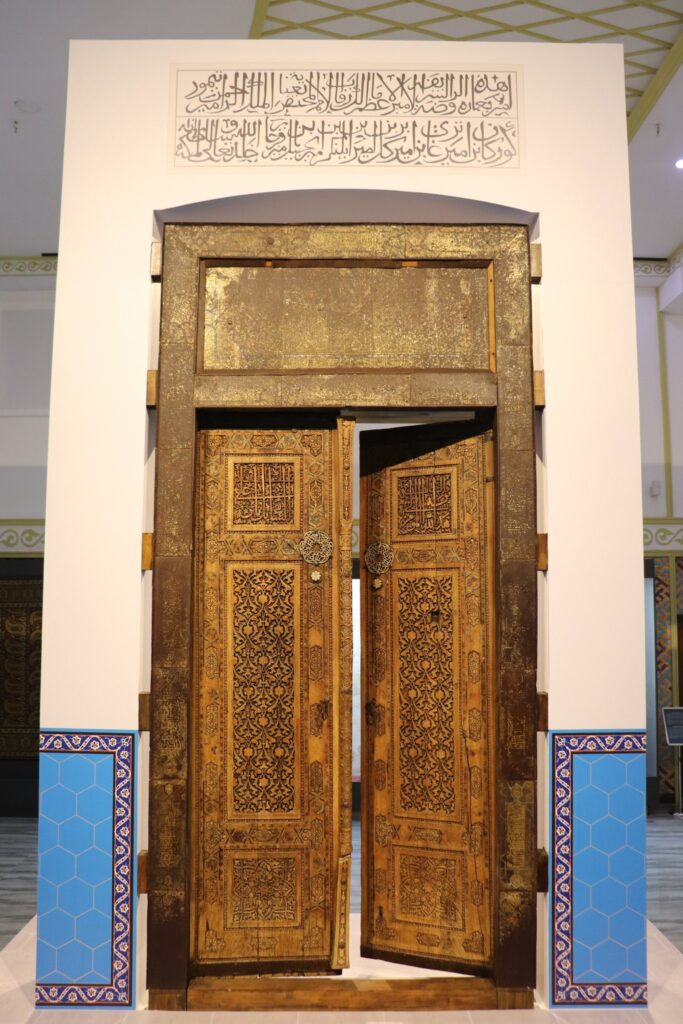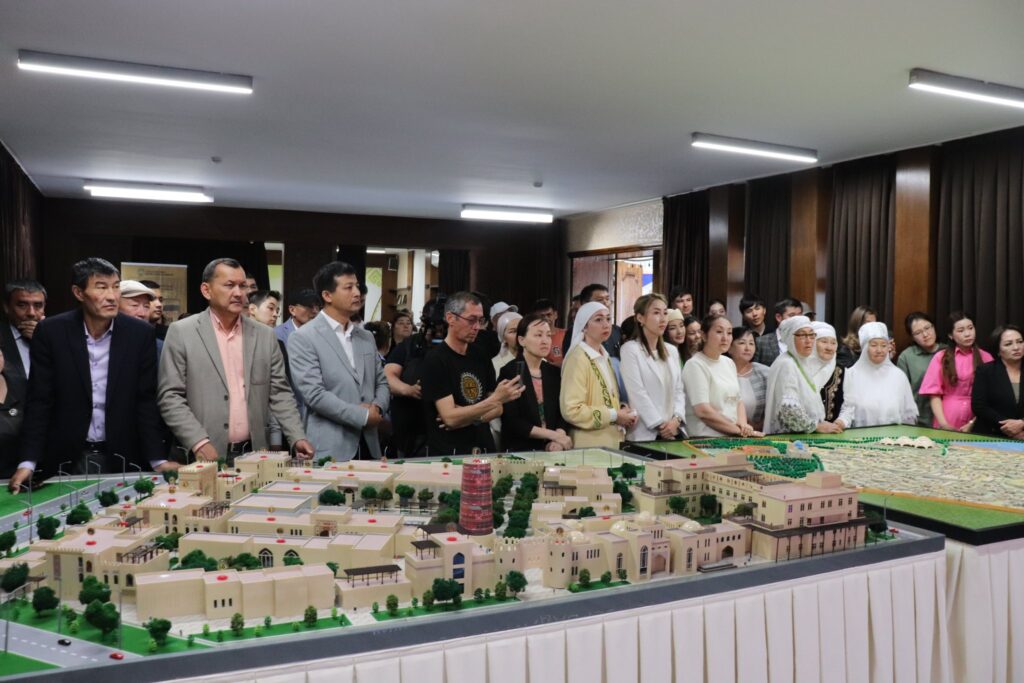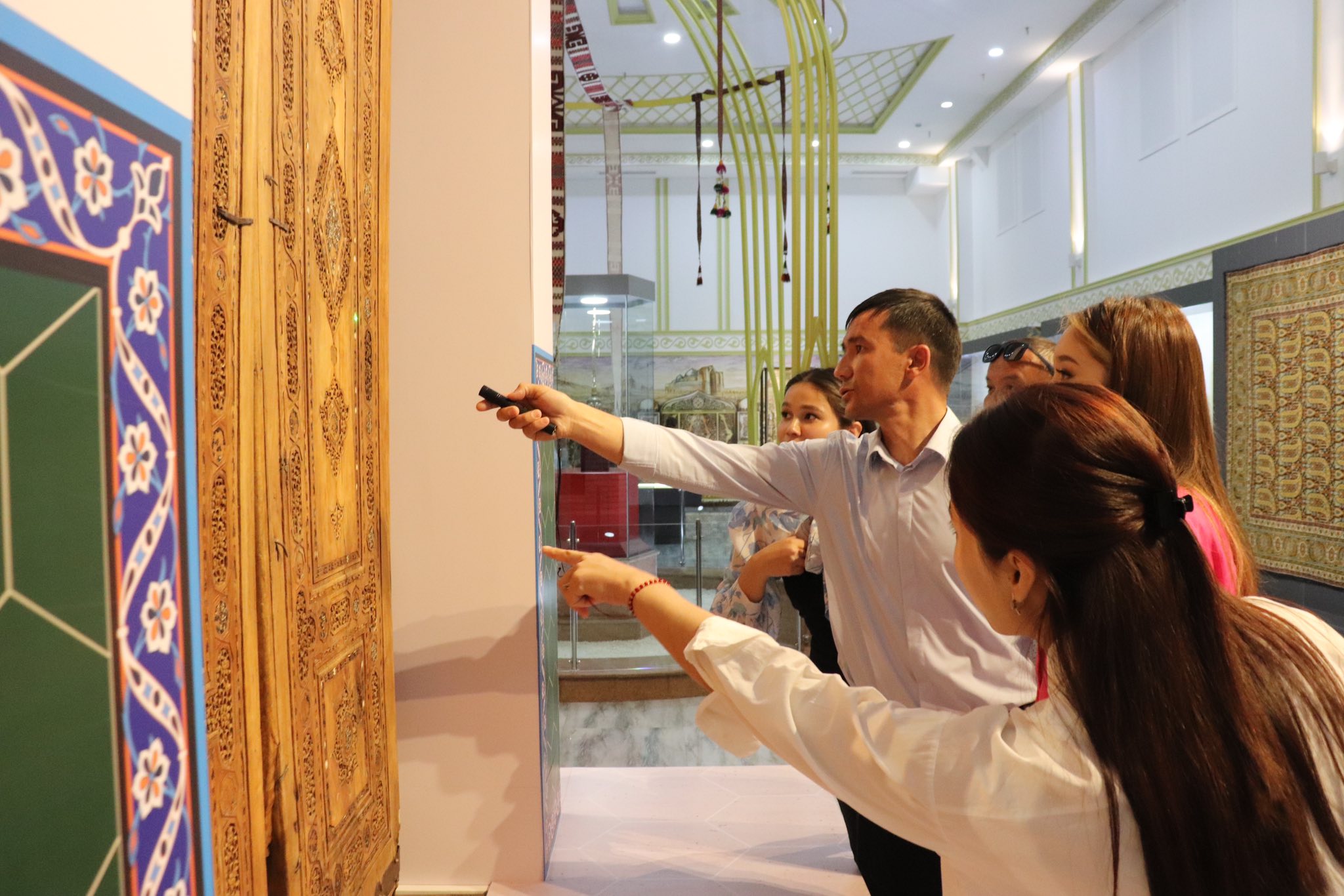
Today, the National Historical and Cultural Museum-Reserve «Hazret Sultan» hosted a presentation of «Kapsyrma», a wooden tomb door that has been preserved in the mausoleum of Khoja Ahmed Yasawi since the 14th century and has been restored in recent years in the scientific restoration laboratory in Almaty.
The doors of the grave, which were restored and returned to Turkestan, were displayed at the Museum of Rare Artifacts of the «Azret Sultan» National Historical and Cultural Museum-Reserve.
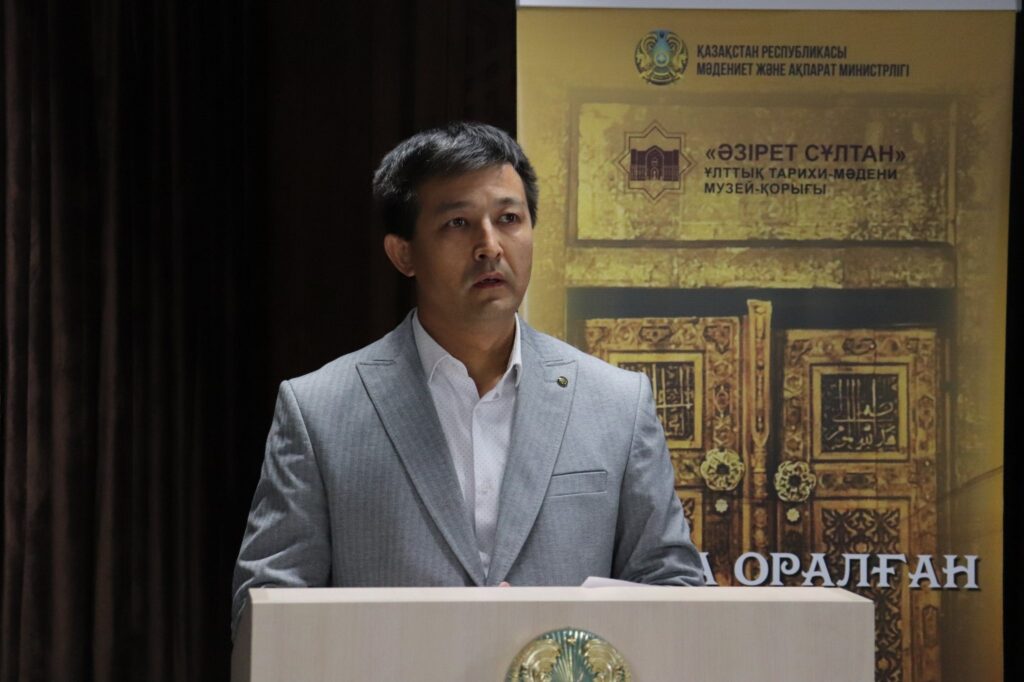
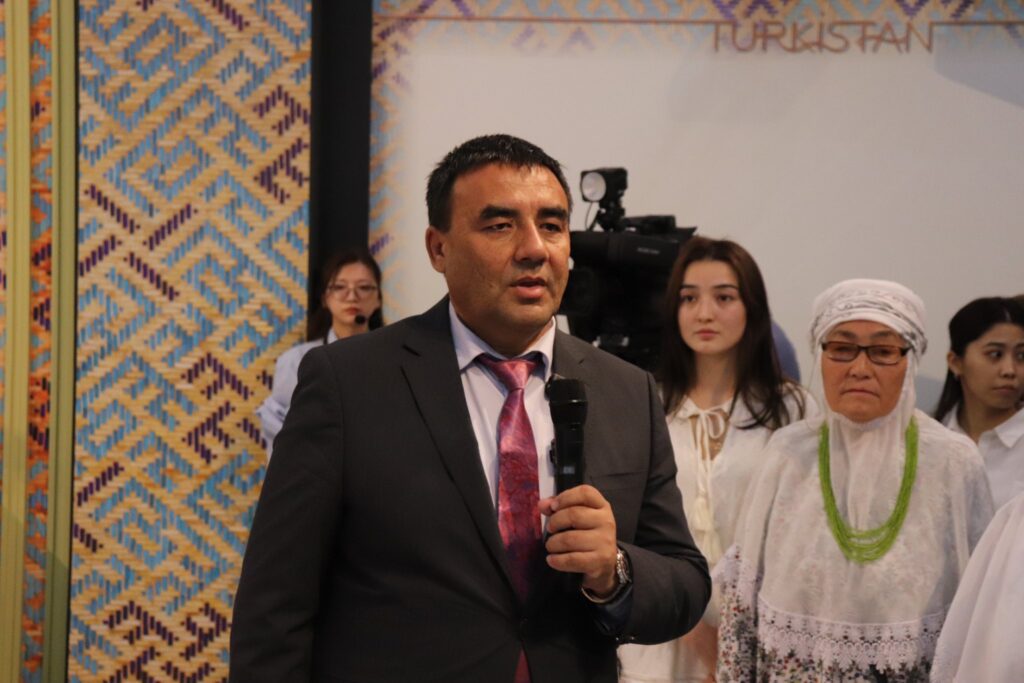
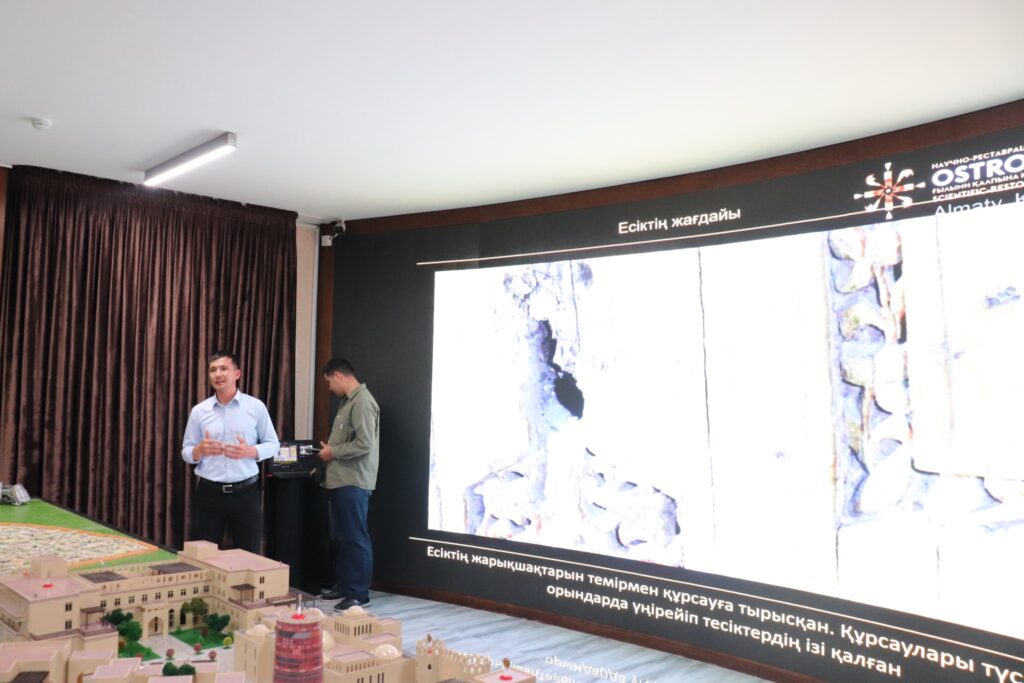
During the event, Omar Abdullayevich, head of the Department for the Protection of Historical Cultural Values of the Turkestan Region Cultural Department, and Murat Meirbekovich, Deputy Director for Scientific Work at the «Azret Sultan» National Museum-Reserve, spoke about the reconstruction of the grave door and the importance of the door for the museum-reserve. The restorer of the architectural restoration department, Nurzhan Alimkhanovich, told how the restoration work was carried out. The head of the National Museum-Reserve «Azret Sultan», the scientific Center for Oriental Studies, Saypulla Mollakanagatuly, explained the meaning of the inscriptions on the doors.
The results of research conducted over two years, starting in 2018, showed that the sacred door, which has been used for more than 6 centuries, began to produce cheese. In particular, the intruders got inside and brought the condition of the door to a dangerous state. In this regard, in 2021, the EIC was sent for restoration and conservation work to the scientific restoration laboratory «Island of Crimea» in Almaty.
The restoration work was carried out by specialists of the scientific restoration laboratory «Island of Crimea» under the guidance of an artist-restorer, a qualified specialist, head of the laboratory Crimea Altynbekov. During this project, modern technologies such as 3D scanning, X-ray and neutron tomography were used.
As a result of careful restoration work carried out over five years, the door was cleaned of dust and pests that had accumulated over the centuries, filled with cavities gnawed by termites, and restored in accordance with the requirements of modern restoration. This allows not only to ensure the continued preservation of the sacred door, but also to see the craftsmanship, spiritual knowledge of that era, as well as to read the deep mysterious inscriptions that have not yet been read.