In the Turkestan region, the burial grounds that have been preserved since ancient times have not yet been fully taken into account and comprehensively studied. These archaeological sites are a source of new data of great importance for the history and archeology of our country. Most of the burial grounds belong to the Andronovo culture of the Bronze Age. Regardless of the era, when studying the history of a particular region, primarily by studying burial grounds, it is possible to determine the period of people’s lives, ethnicity, religious beliefs and other important historical data.
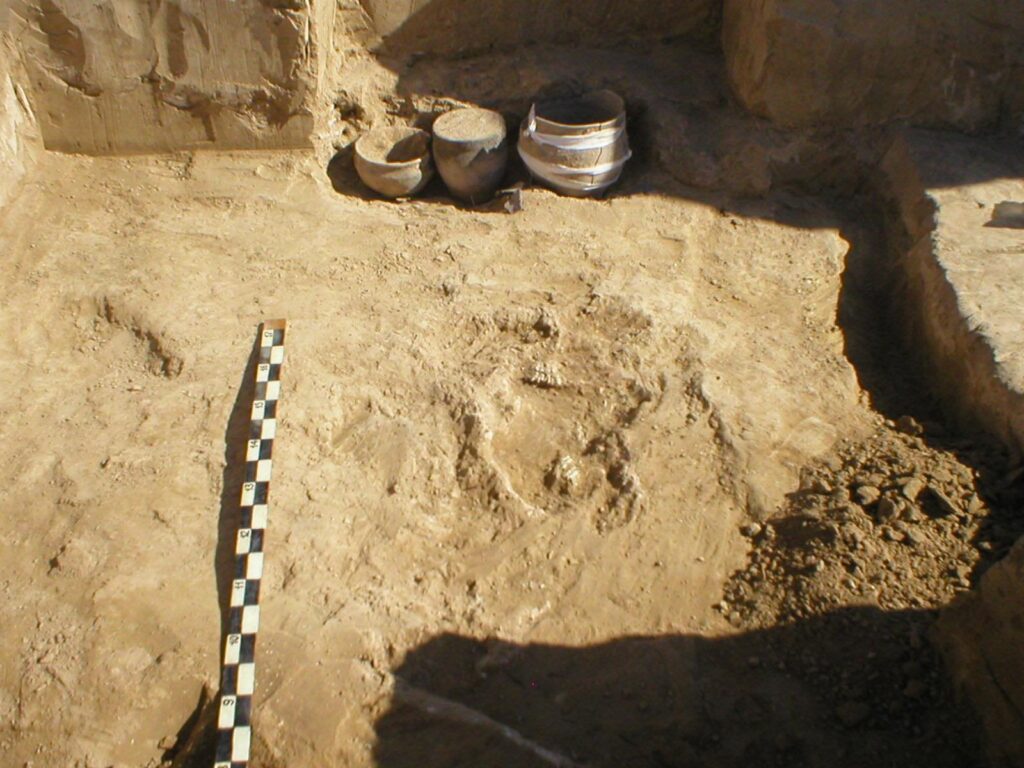
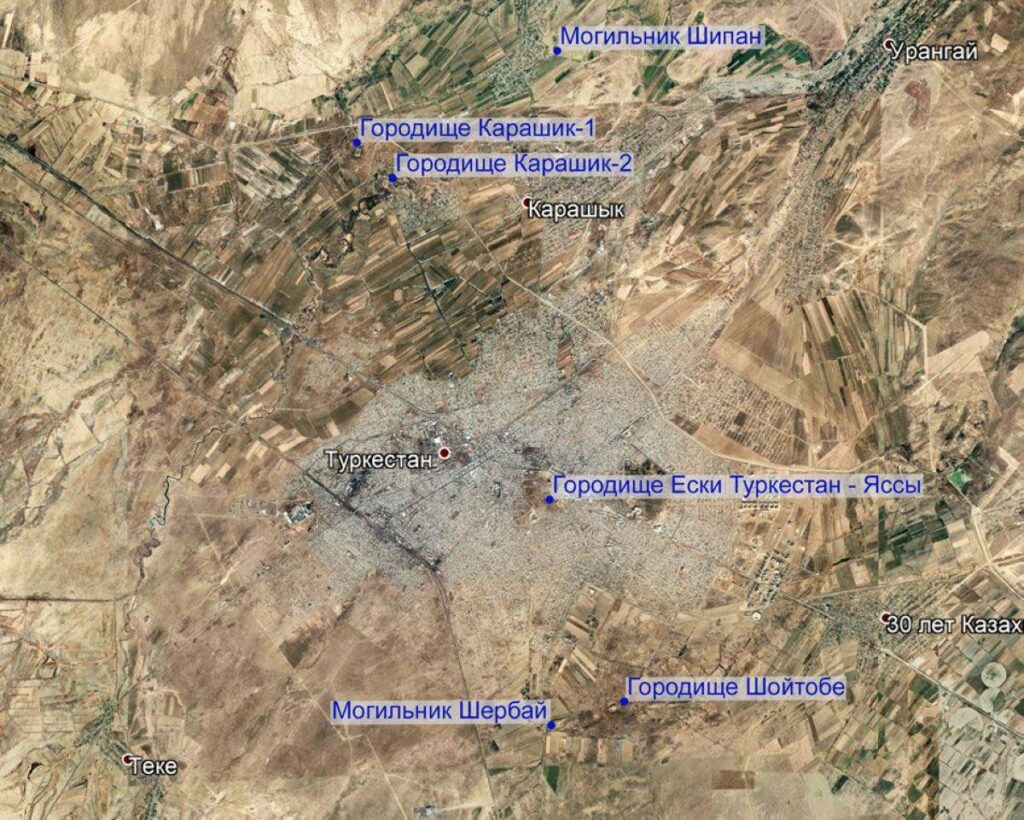
In 2000, the Turkestan archaeological expedition of the National Historical and Cultural Museum-Reserve «Aziret Sultan» and the Archaeological Institute named after A.H. Margulan conducted exploration on a large sandy hill located 2 km southwest of Shoitobe. Archaeological research has shown that this monument belongs to the Bronze Age. Since the Sherbai burial ground covers a total area of 52.5 hectares, it was divided into three parts and surveyed: the western part – Sherbai I, the northern part – Sherbai II, the eastern part – Sherbai III.
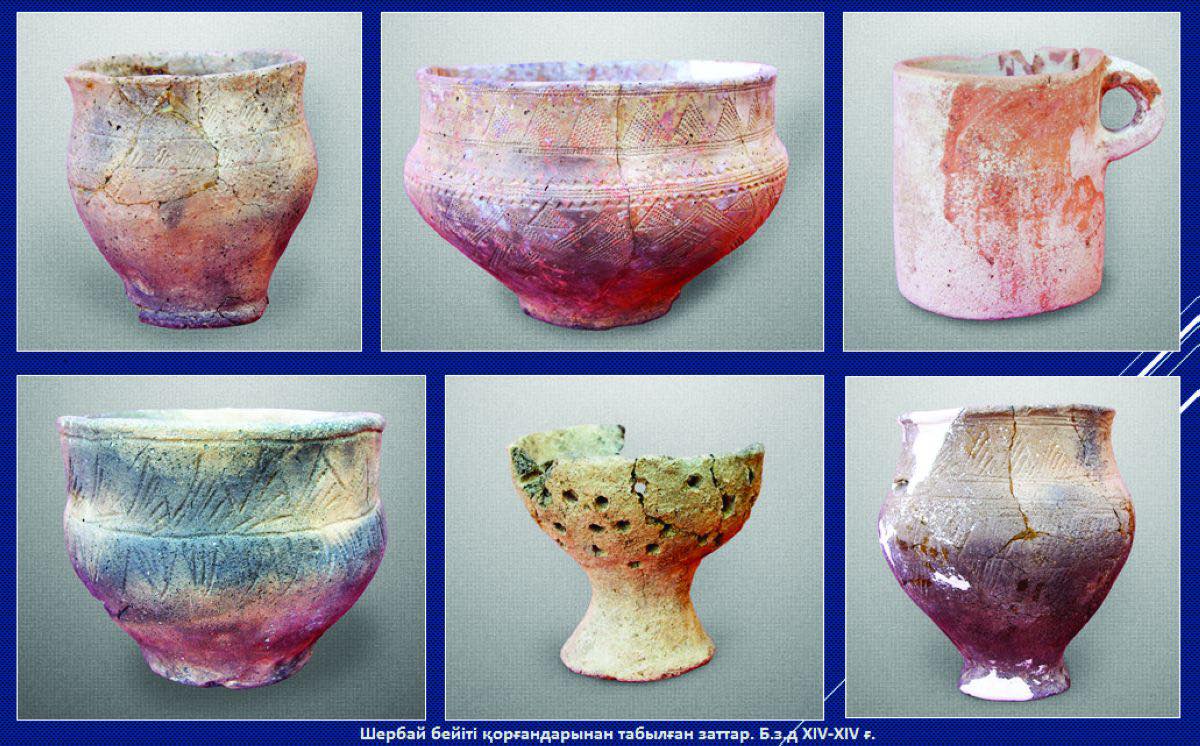
The main excavations were carried out in the area of Sherbai I (17 graves in total). Grave graves No. 4 and No. 13 were proved to belong to the III period of the Kauinshy culture, graves No. 7 and No. 16 to the Early Iron Age, and twelve graves to the Andronovo culture. Studying the ceramics and metal products found, it was found that these objects belong to the period of the XVII–XIV centuries BC.
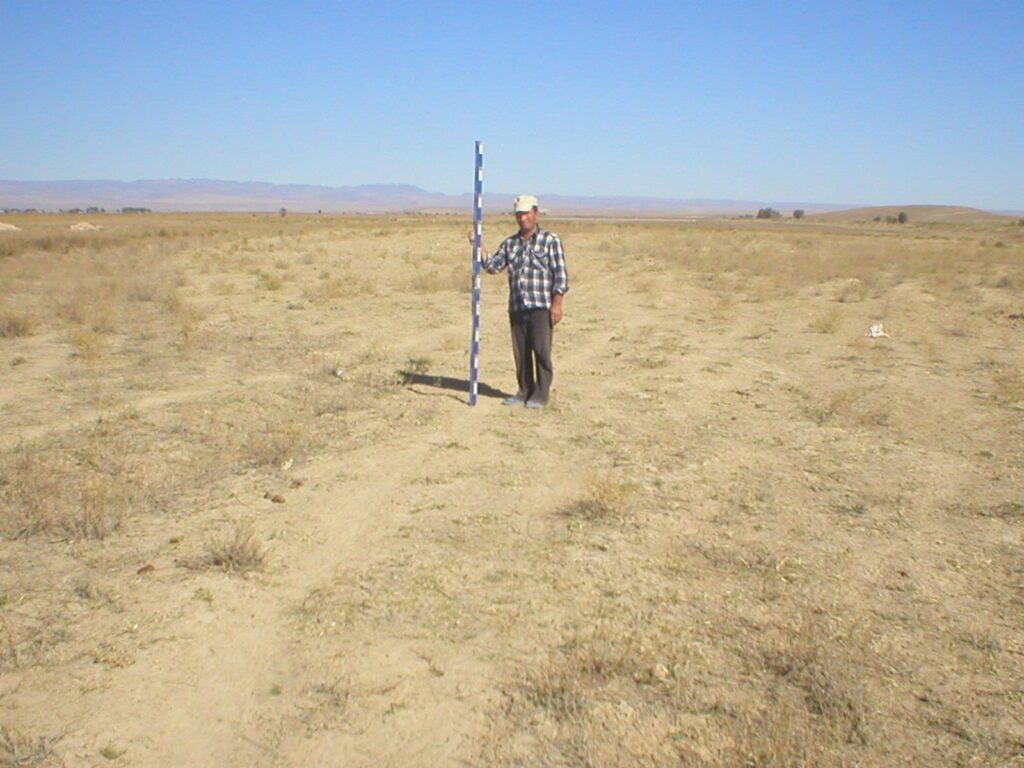
In 2009, the Juynek archaeological survey team, created with the financing of the Aziret Sultan Museum-Reserve, conducted research in the Shipan burial ground. Despite the fact that it was leveled for sowing, an examination of the artifacts found in this burial was carried out, and it was discovered that they were jewelry belonging to a woman. The results of the study showed that this monument belongs to the Alakol period of the Bronze Age – XV–XII centuries BC.
In general, the studies conducted in these burial grounds have proved the existence of monuments inhabited by people from the Bronze Age to the Early Middle Ages. Today, despite the fact that these archaeological sites have begun to disappear from the surface, they make a significant contribution to the deep knowledge of the history of our country.
Oserov Talgat, an archaeologist.