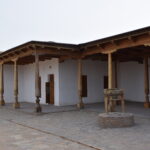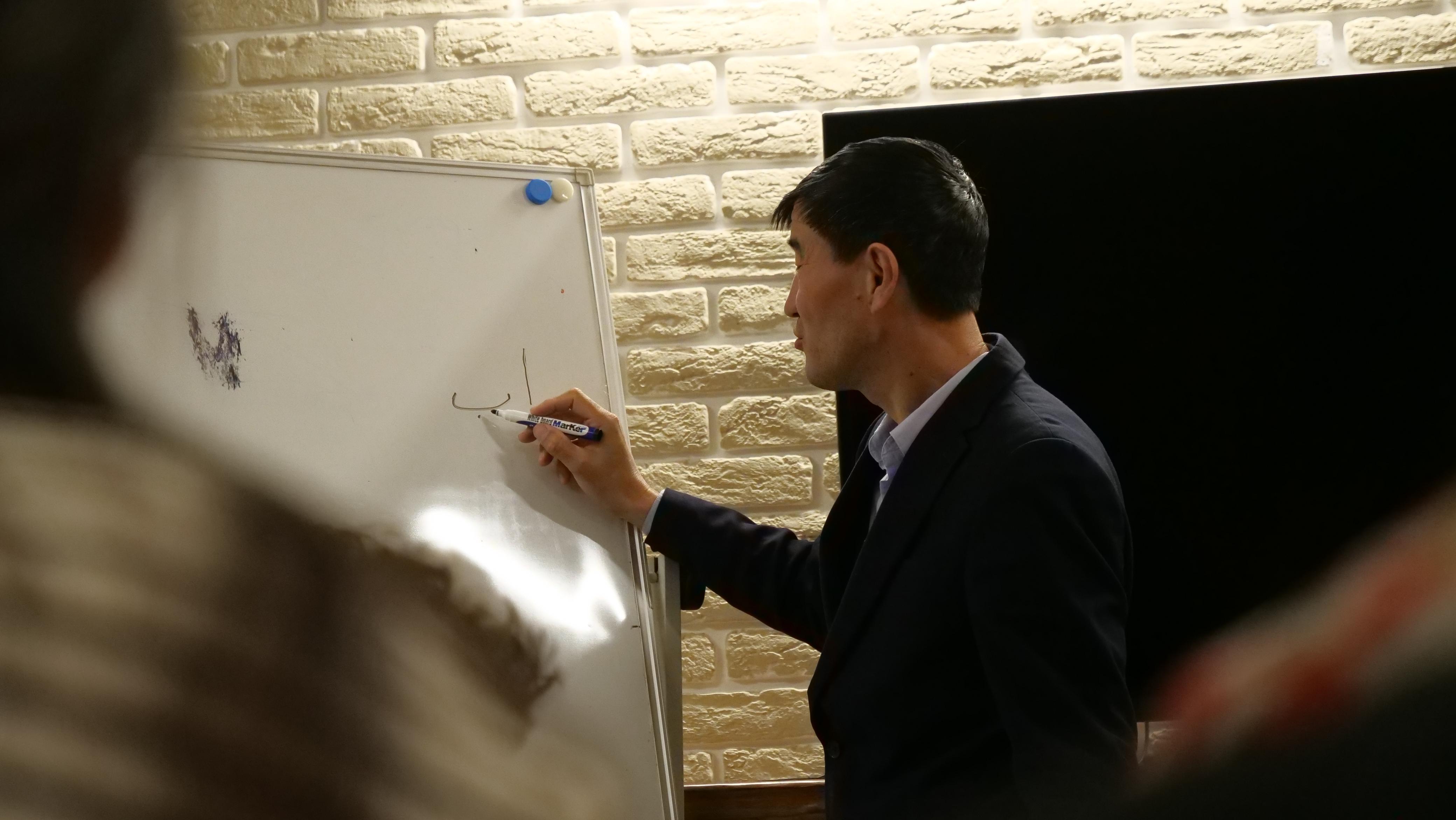
The “Yasawitanu” Club, established under the “Azret Sultan” National Historical and Cultural Museum-Reserve, continued its series of lectures with the topic: “Studying Khoja Ahmed Yasawi’s Manuscript Books ‘Diwani Hikmet’ in Chagatai Language.”
•“Diwani Hikmet”, the renowned work of Khoja Ahmed Yasawi, is a literary masterpiece of Sufi poetry with ethical and didactic content. Yasawi wrote his book in Chagatai, a language widely understood by the Kipchak Steppe and Central Asian Turks at that time. This linguistic choice allowed local Turkic communities to comprehend the complex principles of the Qur’an, various Hadiths, and interpretations originally written in Arabic.
•“Diwani Hikmet” is an artistic work that skillfully integrates elements of oral literature, employing the linguistic, stylistic, and structural methods of Turkic folklore. However, its original manuscript has not survived. The oldest known copy was transcribed in the mid-15th century in Arabic script. Later, printed versions appeared in Kazan (1887-1901), Istanbul (1901), and Tashkent (1902-1911).
•The “Azret Sultan” National Historical and Cultural Museum-Reserve houses a handwritten manuscript of ‘Diwani Hikmet’ copied in 1845, along with other historical manuscripts such as “Risala dar Adabi Tariqat,” “Pakirnama,” “Mirat ul-Qulub,” and “Nasabnama.”
The lecture was conducted by Y. Junisbayev, a junior researcher at the museum-reserve. He first introduced students to the Arabic script, as mastering Chagatai requires a deep understanding of its alphabet. The students showed great enthusiasm in learning the Arabic script.Textologist X. Junisbayev emphasized that language learning is not an easy task, but assured the club members that they would continue to work closely with them, providing all necessary support for mastering Chagatai.
The next session of the “Yasawitanu” Club will continue in February.
Berik BAYBOL, Head of Department